Home Blog Page 23

Exploring the Evolution: The Influence of Streaming Services on Traditional Television

Ever since the advent of the television in the early 20th century, the influence of streaming services has played a significant role in shaping our society, culture, and leisure activities. It has been a central source of entertainment and information in households around the world. However, the landscape of television is undergoing a radical transformation with the rise of streaming services.

Streaming services are platforms that allow users to stream videos, TV shows, and movies over the internet. Some popular ones include Netflix, Amazon Prime, Hulu, and Disney+. Streaming services offer an extensive library of content that can be accessed anytime, anywhere, providing a convenient, personalized, and ad-free viewing experience to their subscribers.

The Rise of Streaming Services

The rise of streaming services has been nothing short of meteoric. In the past decade, they have gained significant popularity due to a number of factors. Firstly, there’s the convenience factor. Streaming services offer a vast array of content that can be accessed at any time from any device with an internet connection. This allows viewers to watch their favorite shows and movies at their own pace without the need to adhere to a broadcast schedule.

Secondly, streaming services often provide exclusive, high-quality content that can’t be found on traditional television. This has given rise to a new trend of binge-watching, where viewers watch multiple episodes or even an entire season of a show in one sitting.

Lastly, streaming services offer a more personalized viewing experience. They use sophisticated algorithms to understand their users’ viewing preferences and recommend content based on these preferences.

The Declining Popularity of Traditional Television

Traditional television, on the other hand, has been seeing a steady decline in popularity. This is largely due to the inconvenience associated with traditional TV viewing. Unlike streaming services, traditional television operates on a fixed schedule, which means viewers need to tune in at a specific time to watch their favorite shows.

Another factor contributing to the decline of traditional television is the prevalence of commercials. On average, traditional television broadcasts 14 minutes of commercials per hour, which can be quite disruptive to the viewing experience.

Moreover, traditional television lacks the personalized viewing experience offered by streaming services. While some cable providers offer on-demand programming, the selection is often limited and lacks the depth and breadth of streaming services.

How Streaming Services are Influencing Traditional Television

Streaming services are not just competing with traditional television, and they’re influencing it. One noticeable change is the shift towards more serialized storytelling. Traditional television, with its episodic format, is being replaced by a more cinematic approach to storytelling driven by streaming services.

Additionally, traditional television networks are beginning to offer their own streaming platforms. For instance, CBS has CBS All Access, NBC has Peacock, and Disney has Disney+. These platforms offer a mix of traditional television content and exclusive online content.

The influence of streaming services is also evident in the production quality of TV shows. With streaming services investing heavily in high-quality, original content, traditional television networks are being forced to up their game to compete.

person holding a remote control
Photo by freestocks.org on Pexels.com

Comparing Viewer Experiences: Streaming Services vs. Traditional Television

The viewer experience between streaming services and traditional television is markedly different. Streaming services offer a more personalized, convenient, and ad-free viewing experience. Traditional television, on the other hand, operates on a fixed schedule and includes numerous commercials.

Streaming services also offer superior content discovery. They use algorithms to recommend content based on your viewing history, making it easier to discover new shows and movies that align with your interests.

On the flip side, traditional television still has a few advantages. For instance, it’s still the go-to platform for live events, such as sports, news, and award shows. Traditional television also offers a communal viewing experience, where families or friends gather to watch a show or event at a specific time.

The Influence of Streaming Services on TV Advertising

The rise of streaming services has significantly impacted TV advertising. With more viewers switching to ad-free streaming platforms, advertisers are having to rethink their strategies. Many are moving their ad dollars to digital platforms, where they can more accurately target their audience and measure the effectiveness of their ads.

Additionally, streaming services are exploring new advertising models. For instance, some platforms offer a cheaper subscription option that includes ads. This gives advertisers a chance to reach viewers on streaming platforms.

The Future of Traditional Television in the Age of Streaming Services

Despite the rise of streaming services, traditional television is not going away anytime soon. However, it will need to adapt to the changing landscape. This could mean offering more on-demand programming, reducing the number of commercials, and investing in higher-quality content.

“Televisions: The magic boxes that shrink the vast world into our living rooms, sparking imagination and bridging cultures, one frame at a time.”

Traditional television networks also need to leverage their strengths. This includes live programming, like sports and news, and the communal viewing experience.

Case Studies: Successful Transitions from Traditional to Streaming

There have been a few successful transitions from traditional television to streaming. One example is CBS All Access, which offers a mix of traditional CBS programming and exclusive online content. Another example is Disney+, which leveraged its extensive library of content and strong brand to quickly build a large subscriber base.

These examples show that traditional television networks can successfully transition to the streaming era by leveraging their strengths and adapting to the new landscape.

Pros and Cons: Streaming Services and Traditional Television

Like all things, both streaming services and traditional television have their pros and cons. Streaming services offer convenience, a personalized viewing experience, and a vast library of content. However, they also require a reliable internet connection and can be expensive, especially if you subscribe to multiple services.

Traditional television, on the other hand, offers live programming and a communal viewing experience. However, it operates on a fixed schedule, includes commercials, and lacks the personalized viewing experience of streaming services.

Conclusion: The Evolving Landscape of Television Consumption

The landscape of television consumption is evolving. Streaming services have gained significant popularity and are influencing the way we consume television. However, traditional television still has a lot to offer, particularly when it comes to live programming and the communal viewing experience.

The future of television will likely be a mix of streaming and traditional television, with each offering unique advantages. As viewers, we can look forward to more choices, better quality content, and a more personalized viewing experience. As the evolution continues, it will be interesting to see how traditional television adapts to this new era of streaming.

Unraveling the Brilliance of Diamond Rap Albums: A Deep Dive

The Role of Virtual Reality in Future Entertainment

Unleashing the Thrill: Top 10 Travel Destinations for Adventure-Loving Men

0

Introduction to Adventure Travel

Travel destinations for adventure-loving men is not for the faint-hearted. It’s for those of us who desire to step out of our comfort zone, embrace the unknown, and truly experience the world in its rawest form. It’s about connecting with nature, pushing your physical and mental boundaries, and creating unforgettable experiences that will last a lifetime.

But what exactly is adventure travel? In the broadest sense, adventure travel is a type of tourism that involves exploring remote, exotic, and possibly hostile environments. It often includes engaging in physical activities, interacting with different cultures, and confronting challenges that require problem-solving and resilience. It’s about immersing yourself in the environment rather than just observing it from a distance.

Adventure travel is not about luxury or relaxation. It’s about getting dirty, experiencing discomfort, and embracing the unpredictability that comes with stepping into the unknown. It’s about the rush of adrenaline, the sense of achievement, and the pure joy of being alive.

Why Men Love Adventure Travel

There’s something inherently thrilling about adventure travel, and it appeals to many men for a variety of reasons. For some, it’s the challenge and the adrenaline rush that comes with confronting the unknown. For others, it’s the desire to break free from the monotony of daily life and to experience something completely different.

Adventure travel also provides an opportunity for men to test their limits and prove their mettle. It’s a chance to push oneself physically and mentally, to overcome fears, and to develop new skills. The sense of achievement that comes from completing a challenging trek, scaling a mountain, or navigating through a dense jungle is incomparable to any other feeling.

Moreover, adventure travel allows men to connect with nature and experience the world in its rawest form. It offers a break from technology and the hustle and bustle of modern life, providing a sense of peace and tranquillity that is often hard to find in today’s world. It’s a chance to step back, to reflect, and to truly appreciate the beauty of our planet.

There are countless destinations across the globe that offer thrilling adventure travel experiences. However, some stand out more than others due to their unique landscapes, challenging activities, and rich cultural experiences. Here, we have compiled a list of the top 10 travel destinations for adventure-loving men.

Destination 1: Detailed overview and adventure activities

The first destination on our list is the Inca Trail in Peru. Known for its stunning landscapes, historical significance, and challenging trek, the Inca Trail is a must-visit for any adventure lover. The four-day trek takes you through lush forests, high mountain passes, and ancient Incan ruins, culminating in the breathtaking sight of Machu Picchu at sunrise.

Destination 2: Detailed overview and adventure activities

Next on the list is Queenstown, New Zealand, often referred to as the ‘Adventure Capital of the World.’ Whether you’re into bungee jumping, sky diving, white water rafting, or mountain biking, Queenstown has it all. The city is surrounded by stunning mountains and lakes, providing a beautiful backdrop for all your adventures.

Destination 3: Detailed overview and adventure activities

For those who love the ocean, diving in the Great Barrier Reef in Australia is a must. This world heritage site is home to an abundance of marine life, including colorful coral, tropical fish, turtles, sharks, and more. Whether you’re a seasoned diver or a complete beginner, diving in the Great Barrier Reef is an experience like no other.

Destination 4: Detailed overview and adventure activities

If you’re looking for an adventure off the beaten path, consider trekking in the Himalayas in Nepal. Home to eight of the world’s ten highest peaks, including Mount Everest, the Himalayas offer some of the most challenging and rewarding treks in the world. You’ll get to experience breathtaking mountain views, diverse flora and fauna, and rich local culture.

Destination 5: Detailed overview and adventure activities

For the thrill-seekers, consider a visit to Interlaken, Switzerland. Known as the adventure capital of Europe, Interlaken offers a range of adrenaline-pumping activities, from paragliding and skydiving to canyoning and white-water rafting. Surrounded by the stunning Swiss Alps, Interlaken is also a great place for hiking and skiing.

two person carrying black inflatable pool float on brown wooden bridge near waterfalls
Photo by Oliver Sjöström on Pexels.com

Destination 6: Detailed overview and adventure activities

Next, consider a visit to Costa Rica, a country known for its rich biodiversity and abundance of adventure activities. From ziplining through the rainforest and surfing on the Pacific coast to trekking in the cloud forest and white-water rafting on the Pacuare River, Costa Rica has something for every adventure lover.

Destination 7: Detailed overview and adventure activities

For a truly unique adventure experience, consider a safari in Tanzania. Home to the Serengeti National Park and the Ngorongoro Crater, Tanzania offers some of the best wildlife viewing in the world. You’ll get to see the ‘Big Five’ – lions, leopards, rhinos, elephants, and buffalos – in their natural habitat, along with a host of other animals.

man sitting on palm tree over beach
Photo by Juan Boche on Pexels.com

Destination 8: Detailed overview and adventure activities

If you’re into rock climbing, a visit to Yosemite National Park in the USA is a must. Known for its towering granite walls, Yosemite offers some of the best rock climbing in the world. The park is also home to stunning waterfalls, deep valleys, and ancient giant sequoias, making it a great destination for hiking and camping as well.

Destination 9: Detailed overview and adventure activities

For those who love the cold, consider a visit to Antarctica. Often referred to as the ‘Last Frontier,’ Antarctica offers a truly unique adventure experience. From exploring icebergs and glaciers on a zodiac boat to witnessing penguins and seals in their natural habitat, a trip to Antarctica is sure to be an unforgettable experience.

Destination 10: Detailed overview and adventure activities

Finally, for a high-altitude adventure, consider a visit to Aconcagua in Argentina. As the highest peak in the Americas, Aconcagua offers a challenging climb that requires physical fitness and mental resilience. The climb takes you through diverse landscapes, including desert, forest, and glacier, and offers stunning views from the summit.

Adventure travel requires careful planning and preparation. From researching your destination and planning your itinerary to packing the right gear and getting in shape, there’s a lot to consider. It’s important to be well-prepared to ensure your safety and to make the most of your adventure.

Before you embark on your adventure, make sure to do thorough research about your destination. Learn about the local culture, customs, and laws, and get a good understanding of the geography and climate. It’s also essential to check the local safety and health advice, as well as the visa requirements and travel restrictions.

“An adventure vacation isn’t just about leaving footprints in unfamiliar territories, but also about imprints left on the soul. It’s where men find their courage, discover their limits, and realize that the world is a vast playground waiting to be explored.”

Packing for an adventure trip can be a challenge, especially when you need to carry everything on your back. It’s important to pack light but also to ensure that you have all the necessary gear and equipment. This may include clothing suitable for the climate and terrain, a high-quality backpack, hiking boots, a first-aid kit, a water purifier, and navigation tools.

Physical preparation is also crucial for adventure travel. Depending on the nature of your adventure, you may need to build your strength, endurance, flexibility, or all of the above. It’s advisable to start training several months in advance to ensure that you’re physically ready for the challenge ahead.

Conclusion: Unleash the Thrill of Adventure Travel

Adventure travel is not for everyone, but for those who embrace it, it offers an unparalleled experience. It’s a chance to push your limits, explore the unknown, and experience the world in its rawest form. Whether you’re hiking in the Himalayas, diving in the Great Barrier Reef, or climbing Aconcagua, adventure travel promises a journey of self-discovery, a test of resilience, and memories that will last a lifetime.

So, are you ready to unleash the thrill of adventure travel? Start planning your next adventure today and experience the world like never before. Remember, the greatest adventure is what lies ahead. Unleash the thrill and embrace the adventure that awaits!

Reasons Why the City of Vancouver BC Outranks Every Other City in the World

Exploring the Big Apple: Top 5 Reasons to Visit New York City!

Tracing the Evolution: A Deep Dive into the History of Men’s Fashion

0

The history of men’s fashion is a fascinating journey that’s as diverse and dynamic as the men it adorns. From the opulent grandeur of the 18th century to the minimalist trends of today, men’s fashion has continuously evolved, reflecting societal changes and cultural shifts. This exploration into the history of men’s fashion provides an intriguing perspective on the changing ideals of masculinity, societal norms, and individual expression.

In the early days, men’s fashion was primarily about status and power. The quality of materials, the intricacy of design, and the level of adornment were all indicators of a man’s position in society. This was seen in the elaborate garments of kings, nobles, and high-ranking officials. However, as societies transformed, so did the fashion landscape.

This transformative journey through the history of men’s fashion is not just about clothes. It is a narrative of societal changes, technological advancements, and cultural shifts. It is a story of how men have expressed their identity, status, and personality through their clothing choices over the centuries.

The Dapper Gentlemen: Men’s Fashion in the 18th and 19th Century

The 18th and 19th centuries were a time of elegance and formality in men’s fashion. The dapper gentlemen of these eras wore ornate, elaborately designed clothing that reflected their social status. The 18th century was dominated by the ‘Macaroni’ trend, where men wore tight-fitting, colorful silk suits, powdered wigs, and tricorn hats. The more elaborate the outfit, the higher the gentleman’s societal rank.

The 19th century, on the other hand, saw a shift towards a more conservative style. The introduction of the ‘sack suit’ – a loose-fitting coat, waistcoat, and trousers – marked a significant departure from the preceding era’s flamboyance. It was during this period that the modern suit and tie began to take shape, setting the stage for the next era’s fashion revolution.

Towards the end of the 19th century, the rise of industrialization and the middle class led to significant changes in men’s fashion. Ready-made clothing became increasingly available, making fashion more accessible to the masses. This democratization of fashion led to a more uniform look among men, regardless of their social standing.

“Men’s fashion is not just a tale of suits and ties, it’s an evolving narrative of identity and expression. It’s the story of centuries, where every stitch, every fabric, and every silhouette is a unique chapter, reflecting the spirit of the times and the boldness of the individual.”

The Shift to Simplicity: Men’s Fashion in the Early 20th Century

The early 20th century saw a significant shift in men’s fashion. The opulence and extravagance of the past were replaced by simplicity and functionality. The modern suit, with its streamlined silhouette and muted colors, became the standard. This was a reflection of the changing societal norms. Men were no longer defined by their clothing but by their actions and achievements.

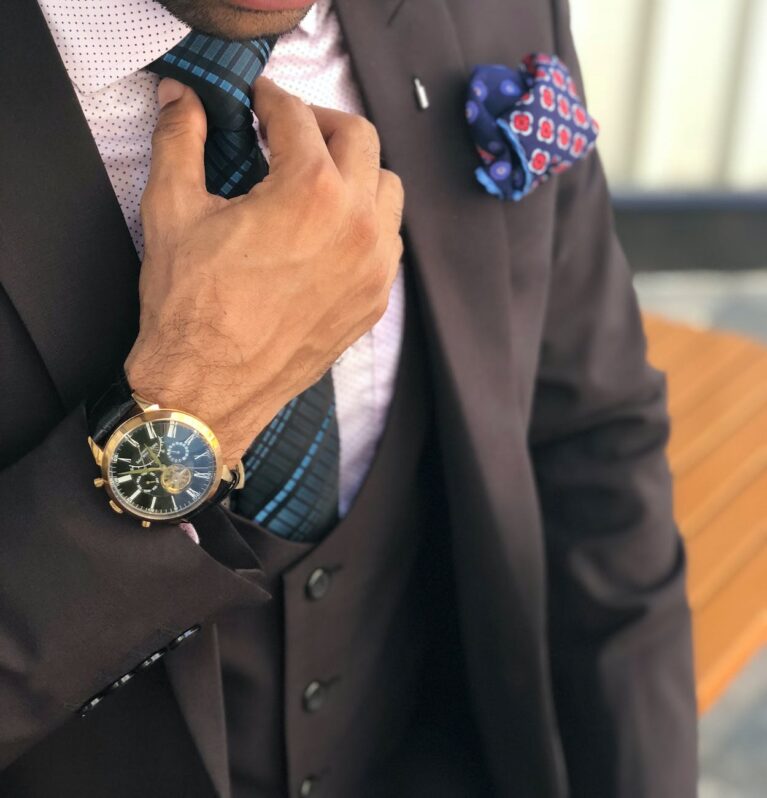
The introduction of the wristwatch was a significant milestone in men’s fashion during this period. Initially designed for soldiers in the trenches of World War I, wristwatches soon became a popular accessory for men, symbolizing practicality and efficiency.

Despite the overall trend towards simplicity, the early 20th century was not without its share of flamboyance. The Roaring Twenties, in particular, were marked by a resurgence of bold, extravagant styles. Men embraced bright colors, patterned fabrics, and flamboyant accessories, reflecting the era’s spirit of optimism and rebellion.

The Rise of Individuality: Men’s Fashion in the Mid-20th Century

The mid-20th century was a time of significant change in men’s fashion. The post-war era saw a rise in consumerism and a growing emphasis on individuality. Men started exploring different styles and experimenting with their looks, leading to a more diverse fashion landscape.

The 1950s were dominated by the ‘Teddy Boy’ style, characterized by flamboyant suits, narrow trousers, and brocade shoes. This was followed by the rise of the ‘Mod’ look in the 1960s, featuring slim-fitting suits, polo shirts, and pointed shoes.

Despite the growing emphasis on individuality, the suit remained a staple in men’s fashion. However, it underwent several transformations, with changes in cuts, colors, and fabrics reflecting the era’s mood and cultural shifts.

The Era of Rebellion and Rock: Men’s Fashion in the 60s and 70s

The 1960s and 70s were a time of rebellion and rock ‘n’ roll, and men’s fashion reflected this spirit. The ‘hippie’ look, characterized by long hair, bell bottoms, and colorful psychedelic prints, became popular during this period. This was a stark departure from the conservative styles of the past and marked the beginning of a more casual, relaxed approach to men’s fashion.

man in formal suit jacket holding his necktie
Photo by The Lazy Artist Gallery on Pexels.com

Simultaneously, the ‘rocker’ look emerged, defined by leather jackets, tight jeans, and band tees. This style was heavily influenced by music icons like The Beatles and The Rolling Stones, further emphasizing the link between fashion and cultural movements.

While the casual styles dominated the era, the suit retained its place in men’s fashion. However, it was reinvented to suit the times. The traditional suit was replaced by more relaxed versions featuring bold colors, wide lapels, and flared trousers – a reflection of the era’s flamboyance and rebellion.

Power Suits and Casual Wear: Men’s Fashion in the 80s and 90s

The 1980s and 90s saw the rise of power suits and casual wear in men’s fashion. The ’80s were defined by the ‘power suit’ – a symbol of status and success. The power suit, with its broad shoulders, double-breasted jackets, and pinstripes, was a reflection of the era’s conspicuous consumption and the growing influence of Wall Street.

The 1990s, on the other hand, saw a shift towards casual wear. The ‘grunge’ look, characterized by flannel shirts, ripped jeans, and combat boots, became popular, reflecting the era’s spirit of rebellion and disillusionment. Brands like Levi’s, Gap, and Tommy Hilfiger dominated the fashion landscape, offering affordable, trendy clothing.

Despite the growing popularity of casual wear, the suit remained a staple in men’s fashion. However, it underwent another transformation with the introduction of the ‘Italian’ cut, characterized by slim-fitting jackets and tapered trousers. This marked a return to a more refined, streamlined look.

The Dawn of the New Millennium: Men’s Fashion in the 2000s

The new millennium brought about significant changes in men’s fashion. The rigid rules and conventions of the past were replaced by a more relaxed, individualistic approach. Men started experimenting with different styles, fabrics, and colors, leading to a more diverse fashion landscape.

The 2000s saw the rise of ‘metrosexual’ fashion, characterized by meticulous attention to grooming and a preference for designer labels. This trend was a reflection of the growing cultural acceptance of men taking an active interest in fashion and personal care.

Simultaneously, the ‘hipster’ look emerged, defined by vintage clothing, skinny jeans, and thick-rimmed glasses. This trend was a reaction to the mainstream fashion industry, reflecting a desire for individuality and authenticity.

Despite the growing diversity, the suit remained a staple in men’s fashion. However, it was reinvented once again with the introduction of the ‘slim-fit’ suit, popularized by designers like Hedi Slimane and Thom Browne.

Today, men’s fashion is more diverse than ever, reflecting a wide range of influences and cultural movements. The current trends include everything from streetwear and athleisure to tailored suits and luxury sportswear. This diversity is a testament to the evolving ideals of masculinity and the growing importance of individual expression.

Looking toward the future, it’s clear that men’s fashion will continue to evolve. One prediction is a further blurring of gender boundaries in fashion, with more men embracing traditionally feminine styles and fabrics. Sustainability is also expected to play a significant role in the future of men’s fashion, with a growing emphasis on ethical production and sustainable materials.

However, despite these changes, one thing remains constant: the suit. As it has throughout history, the suit will continue to adapt and transform, reflecting the changing ideals of masculinity and societal norms.

grayscale photo of man and woman walking on street
Photo by Suzy Hazelwood on Pexels.com

Notable Figures in the History of Men’s Fashion

Throughout the history of men’s fashion, several figures have left an indelible mark. These include designers like Giorgio Armani, Ralph Lauren, and Tom Ford, who redefined the concept of the suit and elevated men’s fashion to new heights.

Equally influential are cultural icons like David Bowie, James Dean, and Steve McQueen, who challenged societal norms and used fashion as a form of self-expression. Their daring styles and bold choices continue to inspire men’s fashion today.

Finally, there are the fashion-forward men of today, like David Beckham, Kanye West, and Pharrell Williams, who are pushing the boundaries of men’s fashion and redefining what it means to be stylish.

Conclusion: The Continuous Evolution of Men’s Fashion

The history of men’s fashion is a fascinating journey marked by constant evolution and transformation. From the ornate garments of the 18th century to the minimalist trends of today, men’s fashion has continuously adapted, reflecting societal changes and cultural shifts.

As we look toward the future, it’s clear that the evolution of men’s fashion is far from over. With a growing emphasis on individuality, sustainability, and gender fluidity, the future of men’s fashion promises to be as diverse and dynamic as the men it adorns.

Why Ariat Jeans for Men are a Must-Have in Your Wardrobe

White Jeans for Men: How to Incorporate them in Your Everyday Wardrobe

Start-up Mistakes: Lessons Learned from Successful Entrepreneurs

As an entrepreneur, I’ve always found the thrill of starting a new business to be intoxicating. Not just because of start-up mistakes. It’s akin to starting a new chapter in life, where you’re in control of your future. It’s not just about making money; it’s about the journey, the challenges, and, ultimately, the satisfaction of creating something valuable. But, like any venture, entrepreneurship is fraught with pitfalls. Start-ups, in particular, face a unique set of challenges that can make or break the business.

The start-up landscape has changed dramatically over the years, evolving to accommodate new technologies, business models, and consumer behaviors. With this evolution comes a new set of challenges that start-ups must navigate. From securing funding to hiring the right team, these challenges can prove to be a steep learning curve for the uninitiated entrepreneur.

Yet, despite these challenges, the allure of entrepreneurship remains strong. The opportunity to innovate, disrupt industries, and make a lasting impact continues to draw people from all walks of life. But to succeed, one must learn not just from their success but, more importantly, from their mistakes.

Common Mistakes Made by Start-ups

In the journey of entrepreneurship, I’ve seen start-ups make some common mistakes that hinder their growth and success. One of the most prevalent mistakes is not having a clear business plan. A business without a plan is like a ship without a rudder – it’s bound to drift aimlessly and, ultimately, sink. A solid business plan not only guides your business operations but also helps attract investors and secure funding.

Another common mistake is neglecting market research. Many start-ups are so captivated by their product or service that they neglect to fully understand their market. They fail to identify their target audience, analyze their competition, or assess market demand. This lack of understanding can lead to ineffective marketing strategies, wasted resources, and, ultimately, business failure.

Yet another mistake is underestimating the importance of cash flow management. Many start-ups focus on revenue and profit, neglecting the crucial aspect of cash flow. Without proper cash flow management, businesses can find themselves unable to meet their operational expenses, leading to financial distress and potential bankruptcy.

Importance of Learning from Mistakes in Entrepreneurship

As entrepreneurs, we’re often told to embrace failure. It’s through failure that we learn, grow, and ultimately succeed. But what does it mean to learn from our mistakes? In the context of entrepreneurship, it means recognizing where we went wrong, understanding why we made those mistakes, and figuring out how to avoid them in the future.

Learning from our mistakes is as much about self-reflection as it is about business strategy. It’s about acknowledging our limitations and shortcomings and seeking ways to improve. It’s about fostering a culture of continuous learning and improvement within our organization.

At the same time, learning from mistakes goes beyond introspection. It also involves seeking external perspectives – from mentors, peers, and even competitors. By understanding their experiences and insights, we can gain valuable lessons that can help us navigate our entrepreneurial journey.

Lessons Learned from Successful Entrepreneurs

Throughout my entrepreneurial journey, I’ve had the opportunity to learn from some of the most successful entrepreneurs in the industry. Their experiences and insights have been invaluable in shaping my approach to business and entrepreneurship.

One key lesson I’ve learned is the importance of resilience. The road to success is often paved with failures, rejections, and setbacks. But successful entrepreneurs are those who remain unfazed by these obstacles. They view every failure as a learning opportunity, every rejection as a chance to improve, and every setback as a test of their resilience.

Another crucial lesson is the importance of adaptability. In the ever-changing business landscape, entrepreneurs must be willing to pivot, adapt, and evolve. They must be open to new ideas, technologies, and business models. They must be willing to challenge their assumptions, test their hypotheses, and embrace change.

Finally, successful entrepreneurs understand the value of relationships. They recognize that their success is not just a result of their efforts but also the support and collaboration of others. From employees and partners to customers and investors, successful entrepreneurs cultivate strong relationships that propel their businesses forward.

business plan schedule written on the notebook
Photo by Mikael Blomkvist on Pexels.com

Case Study: Start-up Mistakes and Lessons Learned from Twitter

Twitter, the popular social media platform, is an excellent example of a start-up that has learned from its mistakes. In its early days, Twitter struggled with instability and frequent service outages. Users were often greeted with the infamous “fail whale” error message, indicating that the service was overloaded.

Twitter’s struggles were largely due to its rapid growth. The platform was gaining users faster than it could handle, leading to performance issues. But rather than seeing this as a failure, Twitter saw it as an opportunity to learn and improve.

The company invested heavily in improving its infrastructure, enabling it to handle the increasing user load. It also revamped its error handling, replacing the “fail whale” with a more user-friendly error message. These changes not only improved the user experience but also enhanced Twitter’s reputation as a reliable and robust platform.

Case Study: Start-up Mistakes and Lessons Learned from Facebook

Facebook, the world’s largest social network, is another example of a start-up that has learned from its mistakes. One of its most notable missteps was the launch of “Beacon,” an advertising system that shared users’ online activities with their Facebook friends. The feature was heavily criticized for its invasive nature and lack of privacy controls.

In response to the backlash, Facebook quickly apologized and made significant changes to the feature. It introduced privacy controls, allowing users to control what information was shared. It also made the feature opt-in, requiring users to explicitly consent to the sharing of their activities.

This incident served as a valuable lesson for Facebook. It highlighted the importance of privacy and user control, principles that have since become central to Facebook’s product development.

upset young black guy covering face with hand while working remotely on netbook
Photo by Alex Green on Pexels.com

Case Study: Start-up Mistakes and Lessons Learned from Instagram

Instagram, the popular photo-sharing app, has also had its share of mistakes. One of its most controversial decisions was the introduction of new terms of service that gave the company the right to sell users’ photos without their consent.

Navigating the SEO Landscape: A Complete Guide to On-Page and Off-Page Optimization for Maximum Visibility

The decision sparked outrage among users, many of whom threatened to leave the platform. Realizing its mistake, Instagram quickly reversed the decision and apologized to its users.

This incident taught Instagram a valuable lesson about the importance of user trust. It underscored the need to be transparent and respectful of users’ rights, principles that have guided Instagram’s decisions ever since.

How to Avoid Common Start-up Mistakes

Avoiding common start-up mistakes begins with awareness. Understanding the common pitfalls can help us steer clear of them. But awareness is just the first step. We must also cultivate the right mindset and skills to navigate the challenges of entrepreneurship.

First and foremost, we must foster a culture of learning and improvement. We must view every mistake as a learning opportunity and every failure as a stepping stone to success. We must be open to feedback and criticism and willing to learn from others.

Second, we must be adaptable. We must be willing to pivot, shift, and evolve as the business landscape changes. We must be comfortable with uncertainty and embrace change as an opportunity to grow.

Mastering the Art of Negotiation: Strategies for Success in Business

Finally, we must be resilient. We must be able to weather the ups and downs of entrepreneurship to persevere in the face of adversity. We must have the courage to take risks, the tenacity to overcome obstacles, and the resilience to bounce back from failure.

“Entrepreneurship is not just about building empires, it’s about building character. The journey to success is paved with lessons in resilience, creativity, and the relentless pursuit of vision, even when the odds are against you.”

Role of Mentors and Entrepreneurial Networks in Avoiding Start-up Mistakes

Mentors and entrepreneurial networks can play a crucial role in helping start-ups avoid common mistakes. They provide valuable insights, guidance, and support that can make the entrepreneurial journey less daunting and more successful.

Mentors, with their experience and wisdom, can provide valuable advice and feedback. They can help start-ups navigate the complexities of business, from strategic planning to financial management. They can also provide emotional support, helping entrepreneurs cope with the stress and uncertainty of entrepreneurship.

Entrepreneurial networks, on the other hand, can provide a platform for start-ups to connect, collaborate, and learn from each other. They can provide opportunities for networking, partnership, and learning. They can also provide resources and opportunities that can help start-ups grow and succeed.

Mastering the Art of Work Life Balance: Essential Strategies for Businessmen

Conclusion: Embracing Mistakes as Opportunities for Growth in Start-ups

In conclusion, mistakes are a natural part of the entrepreneurial journey. They’re not just challenges to overcome but opportunities to learn, grow, and improve. By embracing our mistakes, we can turn them into stepping stones to success.

Moreover, we’re not alone in this journey. By leveraging the support of mentors and entrepreneurial networks, we can navigate the challenges of entrepreneurship with greater confidence and success.

So, let’s embrace our mistakes. Let’s learn from them, grow from them, and ultimately turn them into our greatest assets. Because in the world of entrepreneurship, every mistake is an opportunity for growth.

Navigating the SEO Landscape: A Complete Guide to On-Page and Off-Page Optimization for Maximum Visibility

Mastering the Art of Negotiation: Strategies for Success in Business

Navigate Your Fitness Journey: A Guide to Fitness Tracking Apps and Wearables

Welcome to the world of fitness tracking apps and wearables, your new allies in achieving your health goals. These innovative tools are designed to monitor your daily physical activities, providing you with valuable insights into your health and fitness. Whether you’re a seasoned fitness enthusiast or a newbie embarking on a fitness journey, these applications and devices can make your journey smoother and more efficient.

Fitness tracking apps and wearables come in various forms, such as smartphone applications and wearable devices like smartwatches or fitness bands. They collect and analyze data related to your physical activities, including the number of steps you take, calories you burn, distance you travel, and your heart rate. Some advanced models even measure your sleep quality and stress levels.

While the idea of tracking your fitness might seem a bit overwhelming initially, it’s actually quite simple. These tools are designed with user-friendliness in mind, making fitness tracking an easy and convenient process. All you need is a smart device and the motivation to stay fit.

The Importance of Fitness Tracking for Your Journey

Fitness tracking is not just about counting steps or tracking calories. It’s about understanding your body, setting realistic goals, and making informed decisions about your health. When you track your fitness, you gain a deeper understanding of your body’s needs and responses to physical activities. This knowledge is crucial in creating an effective fitness plan that suits your unique needs and goals.

Moreover, fitness tracking adds an element of accountability to your fitness journey. It’s easy to lose track of your progress or slack off when no one’s watching. But with a fitness tracker, you have a virtual coach that continually monitors your activities and provides feedback. This accountability can significantly boost your motivation and commitment to your fitness goals.

Lastly, fitness tracking helps you measure your progress. It’s one thing to feel that you’re improving, but it’s another to see concrete data showing your progress. With fitness tracking, you can clearly see how far you’ve come and how much closer you are to your goals.

“Fitness tracking is not just about counting steps or calories burned, it’s a daily reminder to yourself that every move you make is a step towards a healthier, happier you. It’s the science of self-improvement, wrapped around your wrist.”

How Fitness Tracking Apps and Wearables Work

At the heart of fitness tracking apps and wearables is the technology called sensors. These sensors collect various types of data, such as movement, heart rate, and even sleep patterns. Once the data is collected, the app or wearable will analyze it and convert it into useful information, such as the number of calories burned or the quality of your sleep.

Most fitness-tracking apps and wearables use GPS technology to track your outdoor activities, like running or cycling. They can also connect to other devices, like your smartphone, to provide more comprehensive tracking. Some apps even offer social features, allowing you to share your progress with friends or join fitness challenges.

Wearables, on the other hand, are worn on the body, typically on the wrist. They contain sensors that collect data continuously, providing real-time feedback about your activities. Most wearables can also connect to your smartphone, allowing you to access more detailed information and features.

Benefits of Using Fitness Tracking Apps and Wearables

Fitness tracking apps and wearables offer several benefits that can enhance your fitness journey. First, they provide personalized insights about your health and fitness. By analyzing your data, these tools can give you a clear picture of your current fitness level and suggest ways to improve.

Second, they promote consistency. Consistency is a key factor in achieving fitness goals. With a fitness tracker, you can set daily or weekly goals and monitor your progress towards achieving them. This can motivate you to stay consistent with your workouts and other healthy habits.

Third, they add an element of fun to your fitness journey. Many fitness-tracking apps and wearables have interactive features, like challenges and rewards, that can make fitness more enjoyable. This can boost your motivation and make your fitness journey more enjoyable.

person holding black tablet
Photo by ThisIsEngineering on Pexels.com

Top Fitness Tracking Apps and Their Features

There are hundreds of fitness tracking apps available today, each with its own unique features. However, some apps stand out due to their comprehensive tracking capabilities, user-friendly design, and positive user reviews. Here are a few top fitness-tracking apps:

  1. MyFitnessPal: This app is known for its extensive food database, making it ideal for tracking your diet. It also tracks physical activities and integrates with various fitness wearables.
  2. Strava: Perfect for runners and cyclists, Strava offers detailed tracking of your routes, speed, and elevation. It also has a social feature, allowing you to compete with other users.
  3. Fitbit: While it’s best known for its wearable devices, Fitbit also offers a comprehensive fitness tracking app. It tracks various activities, including steps, sleep, heart rate, and more.

Best Fitness Wearables and Their Benefits

Like fitness tracking apps, fitness wearables come in various types and offer different features. Some of the best fitness wearables include:

  1. Fitbit Charge 4: This fitness band offers comprehensive tracking, including steps, heart rate, sleep, and more. It also has a built-in GPS for tracking outdoor activities.
  2. Apple Watch Series 6: More than just a smartwatch, the Apple Watch offers detailed fitness tracking, including heart rate, oxygen levels, and even ECG readings.
  3. Garmin Forerunner 245: Designed for runners, this watch offers advanced tracking features, like VO2 max and training status. It also includes safety features, like incident detection.

How to Choose the Right Fitness Tracking App or Wearable

With the plethora of fitness-tracking apps and wearables available, choosing the right one can be overwhelming. Here are some factors to consider:

  1. Your Fitness Goals: Choose a tool that aligns with your fitness goals. If you want to lose weight, choose an app or wearable that focuses on diet and calorie tracking. If you’re training for a marathon, choose a tool with advanced running features.
  2. Compatibility: Make sure the app or wearable is compatible with your smartphone or other devices.
  3. Budget: Determine your budget. There are free fitness tracking apps available, while wearables can range from affordable to high-end.
  4. Reviews and Ratings: Check out user reviews and ratings to get a sense of the tool’s performance and reliability.

User Reviews: Success Stories of Using Fitness Tracking Apps and Wearables

Many users have found success in their fitness journeys through the use of fitness-tracking apps and wearables. For instance, some users have reported significant weight loss after using MyFitnessPal to track their diet. Others have improved their running performance by tracking their progress with Strava or a Garmin watch.

These success stories demonstrate the effectiveness of fitness tracking in achieving health goals. They also highlight the importance of consistency, as most of these successful users have made fitness tracking a daily habit.

The world of fitness tracking is constantly evolving, with new technologies and features emerging regularly. Future trends in this field include the development of more advanced sensors to track a wider range of health metrics, from stress levels to hydration status. We can also expect to see more integration between fitness tracking tools and other health services, like virtual doctor visits.

Another promising trend is the use of AI and machine learning to provide personalized fitness advice. This could take fitness tracking to a whole new level, making it even more effective in helping individuals achieve their health goals.

Navigating the Crypto World: A Comprehensive Comparison of Proof of Stake vs Proof of Work

Unlocking the Power of Blockchain Technology: How This Revolutionary Technology is Transforming Industries

Conclusion: Making the Most Out of Your Fitness Journey with Tracking Apps and Wearables

Fitness tracking apps and wearables are powerful tools that can greatly enhance your fitness journey. They offer personalized insights, promote consistency, and add an element of fun to your workouts. Whether you’re a seasoned athlete or a fitness newbie, these tools can help you achieve your health goals.

Remember, the key to successful fitness tracking is consistency. Make it a habit to track your activities every day, and use the insights you gain to continuously improve. With commitment and the right tools, you can navigate your fitness journey with confidence and success.

Mastering the Basics: A Comprehensive Guide to Muscle Building for Beginners

The Science Behind Muscle Recovery: Effective Strategies for Post-Workout Healing

Harmony Across Borders: A Cultural Exploration of World Music Festivals

World music festivals are renowned for their unique blend of diverse cultures and eclectic rhythms. These festivals are not just about music, but they are a celebration of cultural diversity, aiming to bring people together through the universal language of music. The atmosphere at these events is electric, filled with vibrant colors, enticing aromas, and the infectious rhythm of music from all corners of the globe.

With the rise of globalization, world music festivals have gained immense popularity. They offer a platform for musicians of different backgrounds to showcase their talent and share their cultural heritage. As an ardent lover of music and culture, I have had the privilege to attend several of these festivals, each one offering a unique and unforgettable experience.

The beauty of world music festivals lies in their inclusivity. They welcome everyone, regardless of their cultural background, age, or musical preference. Whether you are a fan of African drum beats, the mystic tunes of the Middle East, the soulful melodies of Latin America, or the ancient rhythms of Aboriginal Australia, there is something for everyone.

The Cultural Significance of World Music Festivals

World music festivals play a significant role in preserving and promoting cultural diversity. They offer a platform for artists to showcase their rich cultural heritage, which might otherwise be overlooked in the mainstream music industry. Through these festivals, artists can share their traditions, stories, and values with a global audience, fostering a greater understanding of different cultures.

Moreover, these festivals also act as a catalyst for cultural exchange. They bring together musicians and audiences from different cultural backgrounds, encouraging dialogue and collaboration. This interaction not only broadens the musical horizons of the participants but also promotes mutual respect and understanding among different cultures.

In an increasingly globalized world where cultural identities can often be homogenized, world music festivals serve as a beacon of cultural preservation. They remind us of the richness and diversity of our global cultural heritage and inspire us to celebrate and respect our cultural differences.

Exploring the Diversity in World Music Festivals

The charm of world music festivals lies in their diversity. They feature a wide array of music genres, from folk and traditional to contemporary and fusion. Whether it’s the captivating rhythms of African drumming, the haunting melodies of Celtic music, the vibrant beats of Latin salsa, or the serene tunes of Indian classical music, these festivals offer a smorgasbord of musical flavors from around the world.

Each festival has its unique character and charm, reflecting the cultural heritage of its host country. For instance, the Fes Festival of World Sacred Music in Morocco is renowned for its spiritual ambiance, featuring music that transcends religious boundaries. On the other hand, the Rainforest World Music Festival in Malaysia is known for its eco-friendly ethos and features music inspired by nature.

The diversity extends beyond the music. These festivals also feature a myriad of cultural activities, such as traditional dance performances, art exhibitions, food festivals, and workshops. These activities offer a glimpse into the rich cultural tapestry of different societies, making these festivals a holistic cultural experience.

Top World Music Festivals Around the Globe

There are numerous world music festivals around the globe, each offering a unique cultural experience. Some of the top festivals include the WOMAD Festival in England, which is arguably the largest and most diverse world music festival. It features artists from over 100 countries and offers a variety of workshops and activities, making it a must-visit for any world music enthusiast.

The Fes Festival of World Sacred Music in Morocco is another top pick. It is renowned for its spiritual ambiance and features music that transcends religious boundaries. This festival is a beautiful blend of music, spirituality, and culture, offering a truly unique experience.

For those who prefer a more intimate setting, the Rainforest World Music Festival in Malaysia is a great choice. Set in the heart of a rainforest, it offers an eco-friendly music experience featuring artists from around the globe.

The Role of World Music Festivals in Promoting Harmony Across Borders

concert at night
Photo by Pixabay on Pexels.com

World music festivals play a crucial role in promoting harmony across borders. They bring together people from different cultures, breaking down barriers and fostering a sense of unity through music. At these festivals, one can see people of different races, religions, and nationalities dancing and singing together, transcending their differences and connecting on a human level.

These festivals also promote cultural understanding and tolerance. By showcasing the richness of different cultures, they challenge stereotypes and prejudices, fostering mutual respect and appreciation among different communities.

In a world that is often divided by cultural and political differences, world music festivals serve as a powerful reminder of our shared humanity. They show us that despite our differences, we are all united by our love for music and our ability to appreciate the beauty of different cultures.

The Unique Sounds of Different Cultures at World Music Festivals

World music festivals are a treasure trove of unique sounds and rhythms. From the hypnotic beats of African drums to the soothing melodies of the Indian sitar, the mystical tunes of the Middle Eastern oud, to the energetic rhythms of Latin American salsa, these festivals offer a kaleidoscope of musical experiences.

Each culture has its unique musical style and instruments, reflecting its history, traditions, and values. For instance, the haunting melodies of Celtic music echo the legends and folklore of the Celtic people, while the vibrant beats of African music resonate with the spirit and energy of the African continent.

These unique sounds not only offer an auditory feast but also provide a window into the soul of different cultures. They tell stories of their people, their struggles, their joys, and their dreams, touching the hearts of listeners and creating a bond of understanding and empathy.


“Music festivals are the magical portals where every beat is a heartbeat, every note tells a story, and every melody unites strangers into a family. It’s more than just music; it’s a symphony of cultures, emotions, and shared experiences.”

Experiencing Culture Through Music Festivals: A Personal Perspective

As an ardent lover of music and culture, attending world music festivals has been an enriching and transformative experience for me. I have been mesmerized by the enchanting melodies of the Indian sitar, moved by the soulful tunes of the African kora, and energized by the vibrant beats of Latin American salsa.

But beyond the music, what has truly touched me is the spirit of these festivals. The sense of unity, the respect for cultural diversity, and the sheer joy of celebrating our shared humanity through music has been a powerful and humbling experience. It has broadened my perspective, challenged my prejudices, and deepened my appreciation for the richness of our global cultural heritage.

These festivals have also been a journey of self-discovery. As I immersed myself in different cultures, I discovered aspects of my own personality and values that I was not aware of. I also learned to appreciate the beauty of my own culture and its contribution to the global cultural mosaic.

How to Immerse Yourself in a World Music Festival

Immersing yourself in a world music festival is a unique and rewarding experience. Here are some tips to make the most of it:

  1. Be Open and Curious: Be open to new experiences and curious about different cultures. This will help you appreciate the richness of the festival and make meaningful connections with people from different backgrounds.
  2. Participate in Workshops and Activities: Most festivals offer a variety of workshops and activities, such as dance classes, cooking demonstrations, and art exhibitions. Participating in these activities will give you a deeper understanding of different cultures and enhance your festival experience.
  3. Engage with the Artists: Engage with the artists, either by attending their performances or interacting with them during workshops or meet-and-greet sessions. This will give you a deeper insight into their music and their culture.
  4. Respect the Culture: Respect the culture of the host country and the cultures represented at the festival. This includes respecting their customs, traditions, and values, as well as their music.
aerial view of concert on grounds
Photo by Tom Fisk on Pexels.com

The Future of World Music Festivals

The future of world music festivals looks promising. With the rise of globalization and the growing appreciation for cultural diversity, these festivals are set to become even more popular. They are likely to feature a greater variety of music genres and cultural activities, offering an even more enriching and immersive experience for attendees.

Moreover, with the advent of technology, these festivals are likely to reach a wider audience. Live streaming, virtual reality, and other digital platforms can make these festivals accessible to people who cannot physically attend them, bringing the magic of world music to their living rooms.

However, as these festivals grow in popularity, it is essential to preserve their essence. They should continue to promote cultural diversity, foster mutual understanding, and celebrate our shared humanity. After all, that is what makes these festivals truly special.

Conclusion

World music festivals are a celebration of cultural diversity and human unity. They are a testament to our ability to appreciate the beauty of different cultures and to connect on a human level, despite our differences. As we dance to the rhythm of world music, we are reminded of our shared humanity and our collective responsibility to promote harmony across borders.

So, whether you are a music lover, a culture enthusiast, or a global citizen, I encourage you to attend a world music festival. Immerse yourself in the rich tapestry of world cultures, let your heartbeat to the rhythm of world music, and celebrate the beauty of our diverse yet united global family. It will be an experience that will enrich your soul and broaden your perspective, making you a true ambassador of cultural harmony.

Unraveling the Brilliance of Diamond Rap Albums: A Deep Dive

The Role of Virtual Reality in Future Entertainment

Unlocking the Narrative Potential: The Art of Storytelling in Video Games

The art of storytelling has always been central to human communication, enabling us to share experiences, convey emotions, and build connections. Today, this ancient art form is being reimagined and revolutionized in the realm of video games. Video games aren’t just about high scores or defeating the final boss anymore. They have evolved into a platform where complex narratives can unfold, and players can immerse themselves in a variety of rich, dynamic worlds.

Narrative storytelling in video games is a unique blend of traditional narrative elements and interactive gameplay. Unlike books or movies where the story is passively received, in video games, the narrative is an active experience. The player, through their avatar, becomes a part of the story, making choices that can affect the outcome. This interactive nature of video games adds a new level of depth to storytelling, making it a powerful tool for game developers to engage players.

The potential for storytelling in video games is immense, and we are only beginning to scratch the surface. As technology continues to advance, so too does the narrative potential of video games. With the advent of virtual reality and augmented reality, the possibilities for storytelling in video games are expanding even further.

Importance of Storytelling in Video Games

Storytelling is more than just a narrative tool in video games; it’s the heart and soul of the game. The story is what gives the game its context, its purpose, and its depth. Without a compelling story, a game could quickly become a series of repetitive tasks with no emotional engagement.

A well-crafted story can turn a simple game into an unforgettable experience. It can immerse players in a different world, allow them to explore new perspectives, and even challenge their beliefs. Through the power of storytelling, games can evoke a wide range of emotions, from joy and excitement to fear and sadness. This emotional engagement is what keeps players hooked and coming back for more.


“Video game storytelling is an art that fuses imagination and interactivity. It’s not just about winning or losing, but about embarking on journeys, exploring vast worlds, and experiencing narratives that resonate in the heart long after the console is switched off.”

Moreover, storytelling in video games can also provide a platform for exploring complex themes and social issues. Games like “The Last of Us” or “Detroit: Become Human” delve into themes of survival, morality, and the human condition, providing players with a unique and thought-provoking experience.

Exploring the Narrative Potential of Video Games

The narrative potential of video games is vast and varied. Unlike traditional storytelling mediums, video games offer the opportunity for non-linear narratives, where the story can branch out in multiple directions based on the player’s decisions. This creates a unique, personalized experience for each player, as their choices shape the narrative.

The interactive nature of video games also allows for a deeper level of character development. Players can spend hours, days, or even weeks with a character, experiencing their struggles, triumphs, and growth firsthand. This level of immersion can create a strong emotional bond between the player and the character, making the narrative even more impactful.

Video games also have the unique ability to create immersive, dynamic worlds for players to explore. Through stunning visuals, atmospheric sound design, and intricate world-building, game developers can craft rich, detailed environments that act as a canvas for the narrative. These immersive worlds not only enhance the storytelling but also provide a sense of adventure and exploration that is unique to video games.

The Art of Creating Compelling Stories in Video Games

Creating compelling stories in video games is an art that requires a delicate balance of narrative, gameplay, and player agency. The first step is crafting a strong, engaging narrative. This involves developing interesting characters, designing a unique and immersive world, and plotting a story that is both engaging and emotionally resonant.

The next step is seamlessly integrating the narrative with the gameplay. The story should not just be an afterthought or a break between gameplay segments. Instead, it should be interwoven with the gameplay, with each element enhancing the other. This can be achieved through environmental storytelling, where the game world itself tells a story, or through gameplay mechanics that reflect the narrative themes.

Finally, player agency is crucial in video game storytelling. Players should be able to influence the narrative through their actions and decisions. This can be achieved through branching narratives, moral choices, and dialogue options. By giving players agency, game developers can create a more immersive and personal storytelling experience.

Techniques for Effective Storytelling in Video Games

Effective storytelling in video games involves a variety of techniques. One such technique is environmental storytelling. This involves using the game environment to convey narrative information, such as through graffiti on the walls, objects placed in the world, or the architecture and design of the environment.

Another technique is character development. By giving characters depth, personality, and growth, game developers can create an emotional connection between the player and the character. This can be achieved through dialogue, character interactions, and the character’s actions and decisions throughout the game.

Finally, branching narratives are a powerful storytelling technique unique to video games. By allowing the player’s choices to shape the story, game developers can create a deeply personal and engaging narrative experience.

Iconic Video Games with Powerful Narratives

There are numerous examples of video games with powerful narratives. “The Last of Us” is a prime example, with its gripping story of survival and human connection in a post-apocalyptic world. “Bioshock Infinite” also stands out with its complex narrative exploring themes of American exceptionalism and the nature of reality.

“Red Dead Redemption 2” is another example, with its richly detailed world and deeply emotional narrative of honor, redemption, and the death of the Old West. Finally, “The Witcher 3: Wild Hunt” is renowned for its intricate, morally complex narrative and deeply developed characters.

The Impact of Storytelling on Video Game Experience

Storytelling has a profound impact on the video game experience. It gives context and meaning to the player’s actions, turning a simple task into a meaningful journey. It immerses the player in a different world, allowing them to experience new perspectives and explore complex themes.

Moreover, storytelling can evoke a wide range of emotions, making the game experience more engaging and memorable. It can also create a strong emotional bond between the player and the game, making the player care about the characters and the world they inhabit.

Finally, storytelling can provide a sense of progression and achievement. As the player progresses through the story, they can see the impact of their actions and decisions, giving them a sense of accomplishment and satisfaction.

The Future of Storytelling in Video Games

The future of storytelling in video games is bright and full of potential. As technology continues to advance, so too does the narrative potential of video games. Virtual reality and augmented reality offer new opportunities for immersive storytelling, allowing players to literally step into the game world.

Moreover, as video games continue to evolve, so too does their narrative complexity. We are seeing more and more games exploring complex themes and social issues, pushing the boundaries of what video game storytelling can achieve.

Finally, as the medium of video games continues to mature, so too does the recognition of games as a legitimate form of storytelling. More and more, games are being recognized for their narrative achievements, further legitimizing video games as a powerful storytelling medium.

Tips for Game Developers: Unlocking the Narrative Potential

For game developers looking to unlock the narrative potential of their games, here are a few tips. First, focus on character development. Create characters that are complex, relatable, and evolve over the course of the game. This will create an emotional connection between the player and the characters, making the narrative more engaging.

Second, integrate the narrative with the gameplay. The story should not just be an afterthought but an integral part of the game. Use the gameplay mechanics to enhance the story and vice versa.

Finally, give players agency. Allow players to influence the narrative through their actions and decisions. This will create a more immersive and personal storytelling experience, making the player feel like they are truly a part of the story.

gray sony play station game console
Photo by Karolina Grabowska on Pexels.com

Conclusion: The Art of Storytelling – Transforming Video Gaming

The art of storytelling is transforming the world of video games, turning them from simple entertainment into powerful narrative experiences. By blending traditional narrative elements with interactive gameplay, video games offer a unique and powerful storytelling medium.

As technology continues to advance and the medium of video games continues to mature, the narrative potential of video games is only set to grow. With their unique blend of interactivity, immersion, and narrative complexity, video games are truly the future of storytelling.

Unraveling the Brilliance of Diamond Rap Albums: A Deep Dive

The Role of Virtual Reality in Future Entertainment

The Dawn of a New Era: Lionel Messi and Sergio Busquets Join Inter Miami

0

When David Beckham announced plans to start an MLS franchise, he promised to lure top-tier talent to Miami. Now, as the soccer world watches in awe, Beckham’s club, Inter Miami CF, has delivered on that promise in spectacular fashion by signing both Lionel Messi and Sergio Busquets. 

Messi and Busquets: Soccer Titans Join MLS

In a stunning announcement, Inter Miami confirmed the arrival of Messi, widely regarded as one of the greatest footballers of all time, and his former Barcelona teammate Busquets. These signings mark a significant milestone for the MLS, signaling the league’s growing global stature and increasing appeal to world-class talent.

Messi’s Arrival: A Seminal Moment for MLS

Messi’s move to Inter Miami is seen as a turning point for the MLS. The Argentinian maestro’s decision to cross the Atlantic and join the league has been hailed as a watershed moment, set to boost the profile of American soccer globally.

“We are overjoyed that the greatest player in the world chose Inter Miami CF and Major League Soccer, and his decision is a testament to the momentum and energy behind our League and our sport in North America,” MLS Commissioner Don Garber said.


“Football is like a game of chess. You have to think several moves ahead and anticipate your opponent’s next move. It’s not about who runs the fastest or kicks the hardest, it’s about who thinks the fastest.”

Lionel Messi

The Financial Implications of Messi’s Signing

Bringing Messi on board was not a cheap endeavor. Inter Miami’s Managing Owner, Jorge Mas, confirmed that Messi, the club’s newly signed designated player, will earn between $50 million and $60 million annually over the course of his contract, which runs until 2025.

To put this into perspective, Messi’s yearly earnings will be higher than the combined 2023 team salaries of several MLS clubs, including Real Salt Lake, Orlando City SC, New York Red Bulls, St. Louis City SC, and CF Montreal.

Despite the hefty price tag, Messi’s arrival is expected to bring an unprecedented level of attention and interest to the MLS, making it a worthwhile investment for the league.

Busquets Joins Messi in Miami: A Barcelona Reunion

In addition to Messi, Inter Miami also announced the signing of Sergio Busquets, another Barcelona stalwart. Busquets, a World Cup winner and nine-time La Liga champion will join Messi in Miami, adding further star power to the team.

Inter Miami’s Sporting Director Chris Henderson expressed his excitement about the signing, stating, “We’re very happy to bring somebody of Sergio’s pedigree to Inter Miami. He is one of the smartest players to ever play the sport; he reads the game at an unprecedented level and impacts every facet of play.”

Looking Ahead: What Messi and Busquets Bring to Inter Miami

The arrival of Messi and Busquets not only elevates Inter Miami’s star power but also brings a wealth of experience, leadership, and skill to the team. Both players have enjoyed illustrious careers at Barcelona, amassing a plethora of individual accolades and team trophies.

Messi, in particular, boasts a record seven Ballon d’Or titles, three The Best FIFA Men’s Player awards, and two FIFA World Cup Golden Balls. He has also won the UEFA Champions League four times, an Olympic gold medal, three FIFA Club World Cups, ten La Liga titles, and two Ligue 1 titles.

Busquets, on the other hand, has been a mainstay in Barcelona’s midfield for over a decade, renowned for his vision, passing ability, and defensive prowess. He has won the World Cup, the UEFA Champions League, and multiple La Liga titles.

The addition of these two players will undoubtedly boost Inter Miami’s competitiveness in the MLS and may even change the league’s approach to roster building and spending.

The Impact on MLS: A League Evolving?

The signings of Messi and Busquets may serve as a catalyst for MLS to reassess its roster rules and spending limitations, particularly as more clubs show a desire to bring in big-name players.

As the MLS continues to grow and evolve, the arrival of Messi and Busquets could mark an inflection point in the league’s history, potentially opening the door for more global superstars to consider the MLS as a viable and attractive option for their careers.

The Road Ahead: An Exciting Future for MLS

With Messi and Busquets in their ranks, Inter Miami has made a statement of intent for the coming season. Their signings bode well for the future of the club and the MLS as a whole, indicating a brighter, more star-studded future for the league.

As Inter Miami gears up for a new era with Messi and Busquets, fans worldwide will be eagerly waiting to see how these two footballing giants will reshape the landscape of American soccer.

“This is a historic moment for Inter Miami, MLS, and futbol in the United States, both on the sporting side and in this new era of business opportunities,” said Xavier Asensi, Inter Miami CF Chief Business Officer. “We’re tremendously proud to have been able to present Leo with an extraordinary project that we’re sure will be beneficial for all of the parties involved.”

Exploring the Dynamics of Unity: An In-depth Look at Men’s Team Sports

Uncovering the Unseen Connections: A Deep Dive into Sports Similarities

How Technology is Changing the Way We Experience Concerts

The music industry has always been a sector that readily embraces advancements in changing the way we experience concerts. From the creation of vinyl records to streaming services, technology has consistently shaped the way we create, distribute, and consume music. Concerts, an integral part of the music industry, have not been left behind in this technological revolution. In fact, the way we experience concerts today is significantly different from how we did a few years ago, all thanks to technology.

While traditionally, concerts were all about live music and the raw energy of the crowd, they have now evolved into tech-filled experiences offering much more than just live music. This transformation has been a gradual process involving the integration of various technologies aimed at enhancing the concert experience. The introduction of technology in concerts has completely revolutionized the musical landscape, providing an immersive experience for the audience that goes beyond just auditory stimulation.

In this digital age, technology has become the backbone of live concerts. From massive LED screens and advanced sound systems to digital tickets and augmented reality, technology is reshaping the way we experience live music. This article will delve into the role of technology in concerts, exploring how it enhances the concert experience and what the future holds for technology in concerts.

Evolution of Technology in Live Concerts

The integration of technology in live concerts has been a gradual process, beginning with the advent of electricity, which enabled the amplification of sound. This was followed by the introduction of light shows, which added a visual dimension to concerts. However, the real game-changer came with the digital revolution. The advent of digital technology has brought a plethora of changes in the way concerts are conducted.

In the past, concerts were purely about the music. Technology was only used to amplify sound, and the focus was more on the artist and their performance. However, as technology evolved, so did the concert experience. With the introduction of video screens, concerts became more visually engaging. These screens not only magnified the performers, making it easier for the audience at the back to see, but they also added an element of spectacle to concerts.

The next major advancement came with the introduction of computerized lighting systems. These systems, controlled by sophisticated software, allowed for the synchronization of lights with music, creating a more immersive concert experience. The evolution of technology in live concerts did not stop there. The 21st century saw the introduction of even more advanced technology, such as 3D sound systems, high-definition video screens, and even drone technology.


“In the concert halls of the future, music will not be confined by walls, but amplified by the boundless expanse of technology. Yet, beneath the echoes of innovation, the heart will always yearn for the irreplaceable harmony of shared emotions and live connections. That is the beautiful paradox of progress – we are eternally drawn towards the new, while holding onto the essence of the old.”

The Impact of Technology on Concert Experience

The impact of technology on the concert experience is immeasurable. It has not only transformed the visual and auditory aspects of concerts but has also reshaped the way we attend and interact with concerts. One of the most significant impacts of technology on the concert experience is the creation of a more immersive and engaging experience.

In the past, concerts were a one-dimensional experience focused solely on the music. However, with the introduction of advanced lighting systems, video screens, and other visual effects, concerts have become multi-dimensional experiences that stimulate multiple senses. This has made concerts more engaging, drawing audiences into the performance and creating a more immersive experience.

In addition to enhancing the sensory experience, technology has also made concerts more interactive. With the advent of social media and mobile technology, concert-goers can now share their experiences in real time, creating a sense of community and enhancing the overall concert experience. Furthermore, technology has also made concerts more accessible. With live streaming and virtual reality technology, those who cannot physically attend a concert can still experience it virtually.

The Role of Technology in Enhancing Concert Visuals

One of the most significant roles of technology in concerts is enhancing the visual aspect of the performance. With the introduction of advanced lighting systems and high-definition video screens, concerts have become more visually spectacular, creating an immersive experience for the audience.

Advanced lighting systems, controlled by sophisticated software, allow for the synchronization of lights with the music. This not only creates a visually stunning spectacle but also enhances the emotional impact of the music, creating a more immersive concert experience. In addition, the use of projection mapping and laser technology allows for the creation of stunning visual effects that further enhance the concert experience.

High-definition video screens, on the other hand, serve two main purposes. Firstly, they magnify the performers, making it easier for the audience at the back to see. Secondly, they add an element of spectacle to concerts. With the ability to display graphics and animations, these screens can transform a concert into a visual feast, enhancing the overall concert experience.

black smartphone turned on
Photo by veeterzy on Pexels.com

How Technology is Used for Ticketing and Crowd Management at Concerts

Technology has also revolutionized the way we purchase tickets and manage crowds at concerts. The advent of digital technology has made the ticketing process more efficient and convenient, doing away with the need for physical tickets. Nowadays, concert-goers can purchase their tickets online and present them on their smartphones at the venue.

In addition to making the ticketing process more convenient, technology has also made it more secure. With the introduction of blockchain technology, it has become possible to create tamper-proof digital tickets, reducing the risk of fraud. Furthermore, digital tickets can also be used to manage crowds more effectively. For instance, they can be used to control access to certain areas of the venue, improving crowd management.

Moreover, technology has also made it possible to enhance safety at concerts. For instance, RFID (Radio Frequency Identification) technology can be used to track the movement of concert-goers, which can be particularly useful in case of an emergency. Also, facial recognition technology can be used for security purposes, helping to identify potential threats.

The Future of Concerts: Virtual and Augmented Reality

The future of concerts looks promising, with technology continuing to play a crucial role in shaping the concert experience. One of the most exciting developments in this regard is the use of virtual and augmented reality in concerts. These technologies have the potential to completely revolutionize the way we experience concerts, taking the concert experience to a whole new level.

Virtual reality (VR) allows for the creation of a fully immersive concert experience. With VR, those who cannot physically attend a concert can still experience it virtually. They can be transported to the concert venue, experiencing the concert as if they were actually there. This not only makes concerts more accessible but also gives concert-goers the opportunity to experience concerts from the comfort of their own homes.

On the other hand, augmented reality (AR) adds a layer of digital information to the physical world, enhancing the concert experience. For instance, AR can be used to display lyrics or additional information about the performance, making concerts more interactive and engaging. Furthermore, AR can also be used to create stunning visual effects, adding an extra dimension to the concert experience.

Case Studies: Concerts Transformed by Technology

There are numerous examples of concerts that have been transformed by technology. One notable example is the Coachella Music Festival, which has been at the forefront of integrating technology in concerts. In 2012, the festival made headlines when it used hologram technology to bring the late rapper Tupac Shakur back to life for a performance.

Another example is the Coldplay concert in 2016, where the audience was given LED wristbands that lit up in sync with the music. These wristbands, controlled by a central system, created a stunning light show that enhanced the concert experience. In addition, the concert also featured a 360-degree stage, allowing the audience to experience the performance from all angles.

In 2018, the band Muse used augmented reality in their concert to create a visually stunning experience. The concert featured AR effects that were synchronized with the music, creating an immersive concert experience. These are just a few examples of how technology is transforming concerts, creating experiences that were unimaginable a few years ago.

The Pros and Cons of Technology in Concerts

While technology has undoubtedly revolutionized concerts, it has also raised some concerns. On the positive side, technology has made concerts more immersive, interactive, and accessible. It has transformed concerts into multi-sensory experiences that go beyond just auditory stimulation. Furthermore, technology has made concerts more accessible, allowing those who cannot physically attend a concert to experience it virtually.

On the downside, the integration of technology in concerts has raised concerns about the authenticity of live performances. With the use of playback tracks and auto-tune, some argue that technology is taking away from the rawness and authenticity of live music. Furthermore, the use of technology in concerts has also raised privacy concerns. For instance, the use of facial recognition technology for security purposes has raised concerns about privacy infringement.

man in black jacket wearing sunglasses
Photo by Yan Krukau on Pexels.com

The Role of Technology in Concert Accessibility

One of the most significant contributions of technology to concerts is enhancing accessibility. With live streaming and virtual reality technology, those who cannot physically attend a concert can still experience it virtually. This not only makes concerts more accessible to those with physical disabilities but also to those who live in remote areas or cannot afford to attend a concert.

Moreover, technology has also made it possible to enhance accessibility within the concert venue. For instance, wearable technology can be used to provide real-time captioning for those with hearing impairments. Also, augmented reality can be used to provide additional information about the performance, making concerts more accessible for those with sensory impairments.

Conclusion: The Future of Technology in Concerts

In conclusion, technology has undeniably transformed the way we experience concerts. It has made concerts more immersive, interactive, and accessible, taking the concert experience to a whole new level. While the integration of technology in concerts has raised some concerns, the benefits undoubtedly outweigh the drawbacks.

The future of concerts looks promising, with technology continuing to play a pivotal role in shaping the concert experience. With advancements in virtual and augmented reality, the concert experience is set to become even more immersive and engaging. As technology continues to evolve, so will concerts, providing us with experiences that are beyond our wildest imaginations.

Unraveling the Brilliance of Diamond Rap Albums: A Deep Dive

The Role of Virtual Reality in Future Entertainment

The Role of Virtual Reality in Future Entertainment

Stepping into the world of Virtual Reality (VR) is like immersing yourself in a completely different universe some think it is the future entertainment. This technology has the power to transport us to any place, real or imagined, and immerse us in experiences that were previously unimaginable. It’s a marriage of our physical senses with the digital realm, creating an experience that’s as close to reality as it can possibly get.

The concept of Virtual Reality isn’t new. It spans back to the 1960s when the first VR head-mounted display was developed. However, it is only now that we’re truly beginning to understand its potential and witnessing its influence on various sectors, particularly entertainment.

Understanding the Concept of Virtual Reality

Virtual reality can be defined as an artificial environment created using computer technology, which can be explored and interacted with by a person. That person becomes part of this virtual world and is immersed within this environment while being able to manipulate objects or perform a series of actions.

Virtual reality is all about the creation of a virtual world that users can interact with. This virtual world should be designed to be so realistic that users would find it hard to tell the difference from the real world. This is the challenge that creators of VR face – to create a truly immersive experience.

The use of VR isn’t limited to just gaming or entertainment. It’s being used in various fields such as medicine, architecture, military training, and education, highlighting its versatile nature. However, its role in redefining the entertainment industry is particularly noteworthy.

The Evolution of Virtual Reality in Entertainment

The entertainment industry has always been at the forefront of adopting new technologies, and VR is no exception. The journey of VR in entertainment has been fascinating. What started as simple arcade games has now evolved into fully immersive experiences, changing the way we consume entertainment.

The 1990s saw the first wave of VR, with arcade games and home consoles attempting to create immersive experiences. However, the technology was not mature enough, and the experience was far from perfect. It wasn’t until the 21st century that VR started to show its true potential in the entertainment sector.

Now, we have VR experiences that allow us to step into our favorite movies, be a part of a concert from the comfort of our homes, or even transport us to another galaxy. It’s safe to say that the evolution of VR in entertainment has just begun, and the future promises to be even more exciting.

The Future of Entertainment: A Glimpse into Virtual Reality

Virtual reality is set to revolutionize the way we experience entertainment. It offers a level of immersion that no other medium can match. Imagine being able to step into a movie, interact with characters, influence the story, or even change the outcome. This is the kind of future that VR promises.

Not just movies, VR has the potential to transform all aspects of entertainment. From gaming and music to art and sports, the possibilities are endless. While we’re just scratching the surface of what’s possible with VR, the future sure looks promising.

In the future, we can expect even more immersive VR experiences. As technology matures, we can expect more realistic graphics, better sound, and even the ability to touch and feel objects in the virtual world. The line between the virtual and the real world will blur, leading to experiences that were previously unimaginable.

How Virtual Reality is Transforming the Entertainment Industry

Virtual reality is already making its mark on the entertainment industry. From gaming and movies to live concerts and theatre, VR is transforming the way we consume entertainment.

In the gaming industry, VR games like Beat Saber, Half-Life: Alyx, and The Walking Dead: Saints & Sinners are taking the gaming experience to new heights. These games aren’t just about playing; they’re about experiencing. You’re no longer a mere player; you’re part of the game, living the story.

The movie industry is also embracing VR. From short VR films to VR experiences inspired by blockbuster movies, the line between watching a movie and living it is slowly disappearing. In the near future, we might see full-length VR movies that offer a fully immersive cinematic experience.

person wearing black henley shirt and white vr goggles
Photo by mali maeder on Pexels.com

Virtual Reality Experiences in Gaming

Virtual reality has taken the gaming industry by storm. It has opened up new avenues for game developers, allowing them to create immersive experiences that were previously impossible.

With VR, gaming is no longer a passive experience. It’s active, immersive, and engaging. You’re not just playing a game; you’re in the game. This level of immersion enhances the gaming experience, making it more enjoyable and engaging.

VR gaming is also pushing the boundaries of storytelling. With VR, developers can create immersive and interactive narratives that players can be a part of. This adds a new dimension to gaming, making it a more enriching and engaging experience.

Virtual Reality in Cinema and Television

Virtual reality is also making its way into cinema and television. While traditional cinema offers a passive viewing experience, VR offers an active and immersive experience. You’re not just watching a movie; you’re in the movie.

Several filmmakers are exploring the potential of VR to tell stories in a new and immersive way. Short VR films like “Dear Angelica” and “Allumette” have shown the potential of VR in storytelling. These films offer a 360-degree viewing experience, allowing viewers to experience the story from all angles.

Similarly, television networks are exploring VR to enhance the viewing experience. From VR news broadcasts to VR sports broadcasts, the possibilities are endless. VR has the potential to make television viewing a more interactive and immersive experience.

The Role of Virtual Reality in Live Events and Concerts

Live events and concerts are all about the experience. It’s about being there, feeling the energy, and being a part of the moment. Virtual reality is helping recreate this experience for people who can’t be there physically.


“Virtual reality isn’t just a technology, it’s a doorway to infinite worlds and untapped possibilities. It’s the canvas of the future, where imagination is the only boundary.”

With VR, you can attend a concert from the comfort of your home and still feel like you’re there. You can be a part of a live event happening halfway across the world. This opens up new possibilities for event organizers and artists, allowing them to reach a global audience.

VR can also enhance the experience for those present at the event. From VR performances to VR installations, the possibilities are endless. VR can help create immersive experiences that take live events and concerts to a whole new level.

The Challenges and Opportunities of Virtual Reality in Entertainment

While Virtual Reality offers exciting possibilities for the entertainment industry, it also presents a unique set of challenges. The technology is still in its infancy, and there are several technical challenges that need to be overcome.

One of the biggest challenges is creating realistic and seamless VR experiences. From the graphics and sound to the user interface, everything needs to be perfect to create a truly immersive experience. This requires significant investments in technology and talent, which can be a barrier for many.

Despite these challenges, the opportunities presented by VR are immense. As the technology matures, we can expect to see more innovative and immersive VR experiences. This is an exciting time for the entertainment industry, and I can’t wait to see what the future holds.

Conclusion: The Long-Term Impact of Virtual Reality on Future Entertainment

Virtual reality is more than just a technology; it’s a new medium, a new way of experiencing entertainment. While we’re still in the early stages of VR, the potential is clear. VR promises to transform the way we consume entertainment, creating immersive experiences that were previously unimaginable.

As the technology continues to evolve, we can expect to see more innovative uses of VR in entertainment. From immersive VR games and movies to live VR concerts and events, the future of entertainment is exciting.

Virtual reality is here to stay. It’s not just a passing trend; it’s a revolution. It’s changing the way we experience entertainment, and I, for one, can’t wait to see what the future holds.

Unraveling the Brilliance of Diamond Rap Albums: A Deep Dive

A Monumental Triumph for Cryptocurrency: XRP Declared Non-Security

0

The recent ruling in favor of Ripple, the parent company of XRP, stands as a significant milestone in the crypto world. The United States Securities and Exchange Commission (SEC) deemed XRP not a security, sparking a surge of optimism among crypto enthusiasts and investors. This article will explore the implications of this ruling, its impact on XRP’s price, and how it might shape the future of cryptocurrency regulations. XRP Declared Non-Security!

The Ripple Effect of the SEC Case

The ripple effect of the SEC‘s ruling is evident in the bullish momentum that XRP has experienced since the verdict. This outcome has shifted focus towards the potential influence of such regulatory clarity on the future price movement of XRP.

Crypto trading analyst Michael van de Poppe speculated on the possible ‘mega move’ XRP could make if it breaches key price ranges. His analysis spotlighted the price range between $0.65 and $0.69 as particularly worthy of attention.

“Mega move, for scalps I’d be interested in the ranges of $0.65-0.69 on this one. If that sweep happens, probably we’ll have a new leg up after,” he noted.

The Upshot of the SEC Case

In the wake of this ruling, XRP has seen a slight correction, following a dramatic increase in value. After the court ruling, the cryptocurrency reached a multi-month high of $0.93, recording nearly 90% gains within 24 hours.

This rise allowed Ripple to outshine other established cryptocurrencies in several metrics. For instance, XRP’s trading volume on the South Korean crypto exchange Upbit surpassed that of Bitcoin, reaching $2.6 billion within 24 hours.

However, the legal narrative surrounding XRP isn’t over yet. The presiding judge ruled that Ripple had violated federal law by selling XRP directly to investors. Bill Morgan, a pro-XRP lawyer, also expressed concerns about some aspects of the judgment.

XRP Price Synopsis

At the time of writing, XRP was trading at $0.73, marking a decline of nearly 8% in the past 24 hours. Despite this short-term slump, XRP has rallied over 55% in the last seven days.

From a technical analysis standpoint, XRP is currently dominated by bullish sentiment. A summary of one-day gains obtained from TradingView suggests a ‘buy’ option at 15, while the moving averages recommend a ‘strong buy’ at 13. The oscillators remain neutral at 8.

Currently, XRP is facing significant resistance levels, with the $1 mark standing out as a potential milestone to watch for. However, despite the bullish sentiment surrounding XRP, failure to close above the current $0.75 resistance area could result in a significant retracement.

Disclaimer: The content on this site should not be considered investment advice. Investing is speculative. When investing, your capital is at risk.

A Resurgence in Cryptocurrency

The resurgence in the value of top cryptocurrencies like Bitcoin, Ethereum, BNB, XRP, and others after the 2022 price crash marks a significant shift in the crypto market.

Bitcoin’s price has doubled from its late 2022 price, topping $30,000 per bitcoin. This rebound has been aided by two shock crypto flips that have lent a helping hand to the recovery of the crypto market.

The anticipation of $30 trillion worth of capital hitting the market, if any one of the recent flurries of U.S. spot bitcoin exchange-traded fund (ETF) filings are approved by the SEC, has led to a surge in optimism.

“The big deal is that the ETF is the platform or vehicle that so many financial advisors prefer,” said Bloomberg Intelligence ETF analyst Eric Balchunas. “This matters because financial advisors manage about $30 trillion in assets [and] this would open up all that money. Even 1% or 2% of $30 trillion is a lot of money … it’s a bridge to all that wealth.”

The Ripple Case: A Turning Point?

The crypto market has rocketed, adding around $60 billion, after Ripple claimed victory in its long-running legal battle with the SEC. A U.S. judge ruled that the sale of XRP on crypto exchanges did not amount to sales of investment contracts as alleged by the regulator. However, Ripple’s direct sale of $700 million worth of XRP to institutions, hedge funds, and other parties violated securities laws.

Following the eagerly-awaited ruling, the XRP price almost doubled, surpassing Binance’s BNB to become the fourth-largest cryptocurrency by market capitalization. The bitcoin and crypto world celebrated the ruling, interpreting it as a setback to the SEC’s claim of authority over cryptocurrencies.

Navigating the Crypto World: A Comprehensive Comparison of Proof of Stake vs Proof of Work

Unlocking the Power of Blockchain Technology: How This Revolutionary Technology is Transforming Industries

The Future of Cryptocurrency Regulations – XRP Declared Non-Security

The outcome of the Ripple case might have far-reaching implications for the future of cryptocurrency regulations. It could pave the way for further clarity in identifying what should and shouldn’t be considered a security in the eyes of U.S. regulators. This decision could be promising for retail-facing projects and might trigger a wave of innovation in the crypto sector.

However, like many things involving the sector, the decision isn’t completely clear-cut. There are still open questions, and the legal saga surrounding XRP is far from over. But for now, the crypto world can celebrate this small victory on the path to greater regulatory clarity.

Exploring the Synergy Between Web 3.0 and AI: Revolutionizing the Digital Landscape

The Next Frontier: How Web 3.0 is Shaping the Future of the Internet

The Best Running Shoes for Sprinting: A Detailed Review

Sprinting is a high-intensity, short-duration activity that requires a unique combination of strength, technique, and speed. The right pair of running shoes can significantly enhance your performance, providing the necessary support, cushioning, and traction. A good pair of sprinting shoes is like a secret weapon that can help you reach your full potential, reducing the risk of injury and aiding in your overall performance.

Investing in the best running shoes is crucial because your feet are the foundation of your running form. The shoes you wear will affect how your feet strike the ground, how much cushioning you have, and how stable you feel during your sprint. Therefore, it’s essential to choose a pair that suits your needs, preferences, and running style.

However, the market is flooded with countless options, making it challenging to pick the perfect pair. This article aims to help by providing a detailed review of the best running shoes for sprinting.

What to Look for in the Best Running Shoes for Sprinting

When shopping for the best running shoes, there are several factors to consider. First, the shoe’s fit is paramount. It should snugly hug your foot, providing a balance of comfort and support without feeling too tight or loose. It’s also crucial to consider the shoe’s weight; a lighter shoe will enable quicker foot turnover, a key aspect of sprinting.


“Running shoes are the silent partners in your journey of fitness, providing comfort, resilience, and support. The best pair isn’t always the most expensive or the most popular, but the one that feels like an extension of your own feet, propelling you towards your goals with every stride.”

Next, pay attention to the shoe’s cushioning. While sprinters need less cushioning than long-distance runners, a certain amount is still necessary to absorb shock and provide comfort. Also, consider the shoe’s traction. A shoe with a good grip will help prevent slips and falls, especially when sprinting on wet or uneven surfaces.

Finally, consider the shoe’s durability. The best running shoes should withstand the high-intensity demands of sprinting and last for a significant period.

Overview of Top Running Shoe Brands

There are several brands renowned for their high-quality running shoes. Nike, for example, is a leading brand known for its innovative shoe technology and stylish designs. Their shoes often feature advanced cushioning systems and breathable materials for optimal comfort and performance.

Adidas is another top brand offering a wide range of running shoes suitable for different running styles and surfaces. Their shoes are well-regarded for their durability, support, and superior traction.

New Balance, Hoka and Brooks are also worth considering. New Balance offers a combination of comfort, stability, and affordability, while Brooks is known for its consistent focus on runners’ needs, producing shoes with excellent cushioning and support.

close up photography of red and black nike running shoe
Photo by Shane Aldendorff on Pexels.com

Understanding Shoe Technology and Its Impact on Sprinting

Shoe technology has come a long way, with brands continuously innovating to enhance runners’ performance and comfort. For instance, many shoes now feature advanced cushioning systems that absorb shock and reduce impact, making it easier on your joints.

Moreover, shoe technology can impact your sprinting speed. Lightweight materials and aerodynamic designs can help you move faster, while stability features can improve your form and efficiency.

How to Choose the Best Running Shoes for Your Needs

Choosing the best running shoes for your needs involves understanding your foot type, running style, and personal preferences. For instance, if you have flat feet or overpronate, you’ll need shoes with extra support and stability. On the other hand, if you have high arches or under pronate, cushioned shoes might be a better option.

Additionally, consider your running surface. If you’re sprinting on tracks, lightweight shoes with spikes might be ideal. However, if you’re running on roads or hard surfaces, you’ll need shoes with more cushioning and durability.

Tips for Maintaining and Caring for Your Running Shoes

To prolong the lifespan of your running shoes, proper care and maintenance are essential. Always air out your shoes after a run to prevent odors and bacteria buildup. Additionally, avoid machine washing your shoes as it can damage their structure and cushioning system.

It’s also crucial to monitor your shoes for wear and tear. If the soles are worn out, or the cushioning feels less responsive, it’s time to replace your shoes.

The Role of Running Shoes in Preventing Injuries

Running shoes play a crucial role in preventing injuries. They provide the necessary support and cushioning to reduce the impact on your joints, helping to prevent common injuries like shin splints, stress fractures, and a runner’s knee.

Moreover, shoes with good traction can prevent slips and falls, while those with stability features can correct overpronation, reducing the risk of injuries related to poor running form.

The Science Behind Muscle Recovery: Effective Strategies for Post-Workout Healing

The future of running shoes looks promising, with brands continuously innovating to enhance performance and comfort. We can expect more advanced cushioning systems, lighter and more durable materials, and even smart shoes that can track your performance and provide real-time feedback.

Conclusion

Choosing the best running shoes for sprinting can significantly impact your performance and comfort. It’s crucial to consider factors like fit, cushioning, weight, and durability and to choose a pair that suits your needs and preferences. With the information provided in this article, you’re now better equipped to make an informed decision and find the perfect pair for your sprinting adventures.

Mastering the Basics: A Comprehensive Guide to Muscle Building for Beginners

Decoding Fitness: Exposing the Top 10 Fitness Myths

Introduction to Fitness Myths

As a fitness enthusiast, I’ve heard it all – the good, the bad, and the outright absurd. There’s a myriad of fitness myths and misconceptions surrounding it, and it’s high time we debunk these fallacies. In this article, I’m going to expose the top 10 fitness myths that you’ve probably heard, believed, or even practiced.

These myths not only lead to misguided fitness routines but can also result in injuries, unhealthy practices, and disappointment. A proper understanding of fitness is crucial to achieving your goals. So, let’s get started on unraveling the truth behind these fitness myths.

Understanding Fitness: The Basics

Before diving into the myths, it’s essential to understand what fitness truly entails. Fitness is a state of health and well-being that allows us to perform aspects of sports, occupations, and daily activities. It involves the balance of physical, mental, and nutritional health.

Contrary to popular belief, fitness is not solely about the hours spent at the gym or the sweat broken during a workout. It’s about the quality of your exercise, your diet, your mental health, and your overall lifestyle. With this in mind, let’s delve into the common fitness myths that have been circulating around.

Fitness Myth 1: No Pain, No Gain

The first myth on our list is the infamous “No pain, no gain” mantra. While discomfort during exercise is common, extreme pain is not. Pushing your body beyond its limits can lead to injuries, muscle strain, and even permanent damage.

Exercise should challenge your body but not harm it. It’s crucial to listen to your body’s signals and know the difference between muscle tension and pain. Pain is your body’s way of telling you that something is wrong, and ignoring it can lead to severe consequences.

Fitness Myth 2: More Sweating Equals More Fat Loss

This is one of the most common fitness myths out there. Sweating is your body’s way of cooling down, not an indicator of fat loss. While it’s true that intense workouts may lead to more sweating, losing water weight is not the same as burning fat.

Your body burns calories to produce sweat, but this doesn’t necessarily equate to fat loss. It’s essential to stay hydrated and replace the fluids lost during workouts to maintain balance and avoid dehydration.


“Fitness is a journey of self-discovery, not a race against misconceptions. Debunking fitness myths is the first step towards embracing a healthier, happier you. Remember, it’s consistency over intensity, progress over perfection.”

Fitness Myth 3: Weight Lifting Makes Women Bulky

For many women, the idea of lifting weights is synonymous with becoming bulky. This is another widespread myth that needs debunking. The reality is that women naturally have less testosterone than men, making it incredibly hard to build large muscles.

In fact, weight lifting can help women achieve a toned physique and promotes fat loss. It also helps in improving bone density, which can prevent osteoporosis later in life. So ladies, don’t be afraid to lift!

Fitness Myth 4: You can Target Weight Loss in Specific Areas

The myth of spot reduction is another fitness fallacy that has been around for a while. The truth is you cannot target weight loss in specific areas of your body. When you lose weight, you lose it throughout your body, not just in one area.

Your genetics determine where fat is stored and where it will be lost first. Therefore, focusing on whole-body fitness is a much more effective approach than trying to target specific areas.

Fitness Myth 5: More Gym Time Means More Fitness

The notion that spending more time in the gym equals more fitness is not only misleading but also potentially harmful. Overtraining can lead to injuries, decreased immunity, and even hinder your progress.

Quality trumps quantity when it comes to workouts. A shorter, more intense workout can be just as effective, if not more so, than a long, low-intensity one. It’s about working smarter, not harder.

Fitness Myth 6: Stretching Before Exercise Prevents Injuries

While stretching is an essential part of fitness, the belief that it prevents injuries is a myth. Research has found that stretching before exercise does not significantly reduce the risk of injury.

However, it’s important to note that this doesn’t mean you should skip stretching altogether. Stretching improves flexibility, increases circulation, and can help improve your performance. It’s just best performed after a workout when your muscles are warm.

men running at gym
Photo by Ardit Mbrati on Pexels.com

Fitness Myth 7: Carbs are the Enemy

Carbs have been unfairly villainized in the fitness world. Contrary to popular belief, carbs are not the enemy. They are a primary source of energy, and a balanced diet should include a healthy amount of carbs.

The key is to choose complex carbs like whole grains, fruits, and vegetables, which provide sustained energy and keep you feeling full longer. Avoiding carbs altogether can lead to fatigue, nutrient deficiencies, and other health issues.

Fitness Myth 8: You Need to Detox Your Body with Juice Cleanses

The idea that you need to detox your body with juice cleanses is another myth that’s gained popularity in recent years. The truth is our bodies naturally detoxify themselves through the liver and kidneys.

While consuming more fruits and vegetables is always a good idea, relying solely on juices for nutrition can lead to nutrient deficiencies. It’s better to maintain a balanced diet and drink plenty of water to support your body’s natural detoxification process.

Fitness Myth 9: All Calories are Created Equal

The belief that all calories are created equal is another fitness myth that needs debunking. While it’s true that a calorie is a measure of energy, the source of the calorie matters.

Calories from nutrient-dense foods like fruits, vegetables, and lean proteins provide more health benefits than empty calories from processed foods. So focus on the quality of your calories, not just the quantity.

Fitness Myth 10: You Can’t Work out When You’re Sick

The final myth on our list is the belief that you can’t work out when you’re sick. The truth is, it depends on your symptoms. If you have a mild cold, light exercise may actually boost your immune system and help you feel better.

However, if you have a fever, body aches, or other severe symptoms, it’s best to rest and allow your body to recover. Always listen to your body and consult with a healthcare professional if you’re unsure.

Busting the Myths: The Science Behind Fitness

Having debunked these common fitness myths, it’s clear that understanding the science behind fitness is crucial. Fitness is a journey, not a destination, and it’s about more than just physical exercise. It involves nutrition, mental health, and a balanced lifestyle.

Remember, there’s no one-size-fits-all approach to fitness. What works for someone else may not work for you. It’s crucial to find a routine that suits your individual needs and goals. And most importantly, always listen to your body.

Mastering the Basics: A Comprehensive Guide to Muscle Building for Beginners

Conclusion: The Truth About Fitness

In conclusion, fitness is a multifaceted concept that involves more than just hitting the gym and breaking a sweat. It’s about adopting a healthy lifestyle that incorporates balanced nutrition, regular physical activity, and mental well-being.

Busting these fitness myths can help us avoid misinformation and adopt a more informed approach to fitness. After all, knowledge is power, and in the realm of fitness, it’s the power to make healthier choices, avoid injuries, and achieve our goals.

Now that you’re equipped with the truth, it’s time to bid farewell to these fitness myths and embrace the reality of fitness. Here’s to a healthier, fitter you!

Unlock Your Mental Wellbeing: 10 Essential Tips for Improving Mental Health!

The Science Behind Muscle Recovery: Effective Strategies for Post-Workout Healing

Time Management for Fitness Enthusiasts: Juggling Workouts and Life

In today’s fast-paced world, time management is crucial for everyone, especially for fitness enthusiasts. Time management for fitness not only requires physical effort but also demands significant commitment. It’s a constant challenge to balance the demands of work, family, and personal commitments while maintaining a regular fitness routine. Lets go over time management for fitness enthusiasts

The first step towards managing time effectively is understanding its importance. Proper time management helps reduce stress, increase productivity, and improve overall well-being. For fitness enthusiasts, efficient time management means more time for workouts and other fitness activities.

Remember, time is a non-renewable resource. Once it’s gone, it’s gone forever. As fitness enthusiasts, we must strive to use our precious time wisely. Your fitness goals are important, and they deserve a dedicated spot in your busy schedule.

The Connection Between Time Management and Effective Workouts

Time management and effective workouts are two sides of the same coin. The way we manage our time has a direct impact on the effectiveness of our workouts. If we hastily squeeze a workout into a busy schedule, the quality of the workout often suffers.

Contrarily, effective time management allows for well-planned workouts. This means time for adequate warm-ups, thorough workout sessions, and proper cool-down periods. A well-planned workout is not only more effective but also reduces the risk of injury.

Time management also impacts the consistency of our fitness routines. Consistency is key in fitness. Regular workouts lead to better results than sporadic, intense exercise sessions. Efficient time management ensures that you are able to maintain consistency in your fitness routine.

Challenges in Juggling Workouts and Life

Despite the best intentions, juggling workouts and life can present several challenges. One of the most common obstacles is a lack of time. Between work, family commitments, and social obligations, finding time for fitness can seem impossible.

Another challenge is dealing with unexpected events. Life is unpredictable. Illness, family emergencies, or extra workloads can disrupt your fitness schedule.

Similarly, maintaining motivation can be difficult. It’s easy to be enthusiastic about fitness when you start a new workout routine. But as the novelty wears off, maintaining the same level of motivation can be challenging.

Strategies for Efficient Time Management for Fitness

Despite the challenges, there are several strategies that can help manage time effectively for fitness. One of the most effective strategies is scheduling your workouts. Treat your workout like an important meeting. Block off time in your calendar and make it non-negotiable.

Another effective strategy is to maximize the use of your time. Combine activities where possible. For example, cycle or walk to work instead of driving. Not only does this add a workout to your day, but it also helps to avoid traffic and save time.

Lastly, consider waking up earlier to workout. Morning workouts not only boost your metabolism but also ensure that your workout is done before other commitments can interfere.

Tips for Incorporating Workouts into Your Daily Routine

Incorporating workouts into your daily routine doesn’t have to be complicated. Start by identifying gaps in your schedule. Do you have a lunch break? Can you wake up an hour earlier? Use these gaps for quick workouts.

Next, try to make fitness a part of your lifestyle. Instead of scheduling separate time for workouts, incorporate fitness into your daily activities. Take the stairs instead of the elevator. Walk during your lunch break.

Remember, every little bit counts. Even short, 10-minute workouts can add up over time. Be consistent, and you’ll see results.

man in black pants and black tank top standing on brown wooden floor
Photo by cottonbro studio on Pexels.com

Tools and Apps for Time Management in Fitness

In today’s digital age, there are numerous tools and apps designed to help with time management in fitness. Fitness apps such as MyFitnessPal and Fitbod can help plan workouts, track progress, and manage fitness goals.

Time management apps like Google Calendar or Outlook can also be incredibly helpful. These apps allow you to schedule your workouts, set reminders, and even share your fitness schedule with friends and family.

Moreover, wearable fitness devices like Fitbits or Apple Watches have built-in features for workout tracking, reminders, and progress reports. These tools can make time management for fitness enthusiasts much more manageable.

Case Study: Successful Fitness Enthusiasts Who Excel in Time Management

There are many successful fitness enthusiasts who excel in time management. Take the example of Richard Branson, the founder of Virgin Group. Despite his busy schedule, he wakes up at 5 am every day to workout. He believes that fitness gives him at least four additional hours of productive time each day.

Similarly, Mark Zuckerberg, the founder of Facebook, is known for his consistent workout routine. Despite his demanding work schedule, he makes time for fitness and considers it a priority.

These successful individuals show that with the right mindset and efficient time management, it’s possible to juggle workouts and life successfully.

Managing Your Time for Fitness: Work-life Balance

Balancing workouts and life doesn’t mean sacrificing one for the other. It’s about finding a balance that allows for both. It’s about prioritizing and making smart decisions.

Remember, maintaining a regular fitness routine doesn’t mean you have to spend hours in the gym. Short, intense workouts can be just as effective. The key is consistency.


“Fitness is not a destination, it’s a way of life. It’s about embracing the journey, nurturing your body, engaging your mind, and nourishing your soul. Not because you must, but because you respect the incredible miracle that is you.”

Also, don’t be too hard on yourself. There will be days when you can’t stick to your workout schedule. That’s okay. Life happens. The important thing is not to give up and to get back on track as soon as you can.

Resources for Further Learning on Time Management in Fitness

There are numerous resources available for further learning on time management in fitness. Books like “The Time-Crunched Cyclist” by Chris Carmichael and Jim Rutberg or “Fit at Any Age: Exercise to Stimulate Not Annihilate” by James M. Wigglesworth are excellent starting points.

Online platforms like Coursera and Khan Academy offer courses on time management that can be applied to fitness. Blogs, podcasts, and YouTube channels dedicated to fitness also provide valuable tips and tricks for managing time effectively.

The Science Behind Muscle Recovery: Effective Strategies for Post-Workout Healing

Conclusion: Making Time Management Work for Your Fitness Goals

In conclusion, time management is a critical skill for fitness enthusiasts. Understand its importance, recognize the connection between time management and effective workouts, and learn to overcome challenges in juggling workouts and life.

Use strategies for efficient time management, incorporate workouts into your daily routine, and leverage technology to your advantage. Learn from successful individuals who excel at time management, strive for balance, and continually educate yourself.

Remember, fitness is a journey, not a destination. Make time management work for your fitness goals, and enjoy the journey. No matter how busy life gets, always make time for fitness. Because in the end, your health is your wealth.

Mastering the Basics: A Comprehensive Guide to Muscle Building for Beginners

The Essential Role of Proteins in Muscle Building: A Deep Dive

Proteins are the building blocks of life and muscle building. They are found in every cell, tissue, and organ in the human body. Proteins are crucial for various bodily functions, but they play a particularly essential role in muscle building. The muscle tissues get damaged when you engage in regular physical activities such as weightlifting. Proteins aid in repairing these damaged tissues, leading to muscle growth.

Muscle building, also known as muscle hypertrophy, is a process that involves an increase in muscle size through a balance of protein synthesis and breakdown. Various factors, including the type of exercise, nutrition, and genetics, influence this process. Among these, nutrition, specifically protein intake, plays an essential role.

In the world of fitness and bodybuilding, proteins are hailed as the holy grail. They’re crucial to building muscle, losing fat, or improving athletic performance. However, there’s more to proteins and muscle building than meets the eye. This blog post will delve deeper into the essential role of proteins in muscle building.

The Science Behind Proteins and Muscle Growth

Proteins are made up of smaller units known as amino acids. These amino acids are the building blocks of our muscles. When we consume protein, our body breaks it down into these amino acids, which are then used for various functions, including repairing and building muscle tissue.

Muscle growth occurs when the rate of muscle protein synthesis (building new muscle proteins) exceeds the rate of muscle protein breakdown (breaking down old or damaged muscle proteins). This state is called positive protein balance or muscle protein balance.

Exercise, specifically resistance and strength training, stimulates muscle protein synthesis. However, the body can maximally stimulate muscle protein synthesis with adequate protein. This is where dietary protein comes into play. It provides the necessary amino acids that the body needs to repair and build new muscle tissue.

Essential Amino Acids for Building Muscle

Amino acids are classified into essential, non-essential, and conditional. The body cannot produce essential amino acids, and must be obtained from the diet. These include histidine, isoleucine, leucine, lysine, methionine, phenylalanine, threonine, tryptophan, and valine.

Among these, leucine, isoleucine, and valine, collectively known as branched-chain amino acids (BCAAs), are essential for muscle building. They stimulate muscle protein synthesis and prevent muscle protein breakdown, leading to muscle growth.

The Role of Dietary Protein in Muscle Building

Dietary protein plays a crucial role in building muscle. It provides the essential amino acids that our body needs to repair and build muscle tissue. It also helps maintain the positive protein balance necessary for muscle growth.

The type of protein you consume also matters. High-quality proteins, such as those found in dairy, meat, eggs, and soy, contain all the essential amino acids in the right proportions. These proteins are more effective at promoting muscle protein synthesis than lower-quality proteins.

How Much Protein Is Needed for Muscle Growth?

The amount of protein needed for muscle growth depends on several factors, including age, sex, body weight, and level of physical activity. However, research suggests that individuals engaging in regular resistance or strength training should consume about 1.6 to 2.2 grams of protein per kilogram of body weight per day.

It’s important to spread your protein intake throughout the day rather than consume it all simultaneously. This is because the body can only utilize a certain amount of protein at a time for muscle building.

side view of a muscular man training in a gym
Photo by Mario Valenzuela on Pexels.com

Best Protein Sources for Muscle Building

High-quality proteins are the best for muscle building. These include lean meats, poultry, fish, dairy products, eggs, and soy. Plant-based proteins, such as beans, lentils, and whole grains, can also support muscle growth, but they are often lower in one or more essential amino acids.

Whey protein, found in milk, is particularly beneficial for muscle building. It’s rapidly digested and absorbed, leading to a quick increase in muscle protein synthesis. It’s also rich in leucine, the most important amino acid for muscle growth.

Protein Timing and Muscle Building

The timing of protein intake can also affect muscle growth. Consuming protein before and after a workout can maximize muscle protein synthesis. However, consuming protein throughout the day is important to maintain a positive protein balance.

Common Misconceptions About Protein and Muscle Building

Many things need to be clarified about protein and muscle building. One common misconception is that consuming more protein will increase muscle growth. However, there’s a limit to how much protein the body can use for muscle building. Consuming more than recommended will not lead to more muscle growth and may even have negative health effects.

Another misconception is that protein supplements are necessary for muscle building. While they can be convenient, getting enough protein from food alone is possible.


“Proteins are the building blocks of life, the scaffolding for your muscles. In the realm of muscle growth, they are not just participants, but the architects, tirelessly working to create strength out of effort.”

Supplements vs. Natural Proteins in Muscle Building

Protein supplements can be a convenient way to increase protein intake, especially for those with a busy lifestyle. However, they should not replace whole foods. Whole foods provide protein and other essential nutrients that are beneficial for overall health and muscle growth.

Natural proteins from food are often more satisfying and can help control hunger better than protein supplements. They also contain other nutrients such as healthy fats, vitamins, and minerals supporting muscle growth.

Mastering the Basics: A Comprehensive Guide to Muscle Building for Beginners

Conclusion: The Undeniable Role of Proteins in Muscle Building

Proteins play an essential role in muscle building. They provide the necessary amino acids that our body needs to repair and build muscle tissue. Regular exercise and adequate protein intake are key to maximizing muscle growth.

However, consuming high-quality proteins and spreading your protein intake throughout the day is important. While protein supplements can be convenient, they should not replace whole foods. Always remember, when it comes to muscle building, balance is key.

In the end, proteins are indeed the building blocks of muscle. Their importance in the process of muscle building can’t be overstated. So the next time you hit the gym, make sure proteins are a significant part of your diet. The results might surprise you.

The Science Behind Muscle Recovery: Effective Strategies for Post-Workout Healing

How to Build a Stylish, Yet Basic Wardrobe for Men

0

Building a basic wardrobe might seem like a daunting task for many. The idea of starting from scratch or revamping your existing wardrobe can be overwhelming. However, it’s not as difficult as you might think. Given the right guidance and understanding, anyone can build a stylish, yet basic wardrobe. In this blog post, we’ll be exploring the art of creating a functional and fashionable wardrobe for men. 

Creating a basic wardrobe involves selecting essential clothing items that can be mixed and matched to create a variety of looks. It’s not about chasing every trend or filling your closet with expensive designer items. Instead, it’s about identifying your personal style and investing in quality pieces that will last for many years.

The goal of this guide is to help men understand the importance of a basic wardrobe, identify the key elements, understand the process of building a stylish and basic wardrobe, and provide tips for maintaining and updating it.

Why Having a Basic Wardrobe is Essential

A basic wardrobe is essential for many reasons. Firstly, it simplifies the process of choosing outfits. When your wardrobe is filled with timeless and versatile pieces, you don’t need to spend hours trying to figure out what to wear. Everything in your closet can work together to create cohesive and stylish outfits.

Secondly, a basic wardrobe allows you to be well-dressed for any occasion. Whether you’re going to work, a casual lunch, or a formal event, you can always put together an appropriate outfit from your basic wardrobe. It’s all about combining different pieces in various ways to suit the occasion and your personal style.

Lastly, having a basic wardrobe can save you time and money in the long run. You won’t need to constantly shop for new clothes because you’ll already have everything you need. Plus, when you invest in quality pieces, they will last for many years, reducing the need for frequent replacements.

Elements of a Basic Wardrobe

The elements of a basic wardrobe may vary slightly depending on your personal style and lifestyle. However, there are certain pieces that every man should have in his wardrobe. These include a good-quality suit, a few well-fitting shirts, a pair of dark jeans, a versatile jacket, and comfortable and stylish shoes.

A basic wardrobe also includes accessories such as belts, ties, and watches. These items can add a touch of style and personality to your outfits. They are also practical and functional, making them a worthwhile investment.

In addition to clothing and accessories, the elements of a basic wardrobe also include the right fit and color. Choosing the right fit for your body type can enhance your appearance and make you look more stylish. Similarly, selecting the right colors can complement your skin tone and add visual interest to your outfits.

The Process of Building a Stylish, yet Basic Wardrobe

Building a stylish, yet basic wardrobe doesn’t happen overnight. It’s a process that requires time, patience, and a clear understanding of your personal style and needs. The first step is to assess your current wardrobe. Identify the items that you love and wear regularly and those that you don’t. This will give you a clear idea of what’s missing and what needs to be replaced.

The next step is to create a list of essential items that you need. This could include a few shirts, a couple of pants, a jacket, a pair of shoes, and some accessories. Once you have your list, start shopping for these items. Remember to prioritize quality over quantity. It’s better to invest in a few high-quality pieces that will last for years rather than buying lots of cheap items that will need to be replaced quickly.

The final step is to organize and maintain your wardrobe. Keep it neat and tidy so you can easily see and access all your clothes. Regularly review your wardrobe to identify any items that need to be replaced or updated.

elegant male outfits on dummies in modern boutique
Photo by Andrea Piacquadio on Pexels.com

Essential Clothing Items for a Simple Wardrobe

There are several essential clothing items that every man should have in his basic wardrobe. These items are versatile, timeless, and can be worn in a variety of ways. They include:

  • A well-fitting suit: A suit is a must-have for formal occasions and professional settings. Choose a suit in a neutral color like black, navy, or grey, and ensure it fits you perfectly.
  • Shirts: Have a variety of shirts in different styles and colors. This could include dress shirts for formal occasions, casual shirts for everyday wear, and polo shirts for a smart-casual look.
  • Pants: Include a few pairs of pants in your basic wardrobe. This could include dress pants, chinos, and jeans. Choose pants in versatile colors like black, navy, grey, and beige.
  • A versatile jacket: A jacket can add a stylish touch to any outfit. Choose a versatile jacket that can be worn with a variety of outfits, such as a leather jacket, a denim jacket, or a blazer.
  • Shoes: Invest in a few pairs of good-quality shoes. This could include formal shoes, casual shoes, and athletic shoes.

Choosing the Right Fit and Color for Your Basic Wardrobe

Choosing the right fit and color for your basic wardrobe is crucial. The fit of your clothes can greatly impact your appearance. Clothes that are too big or too small can make you look sloppy or uncomfortable. Therefore, ensure that all your clothes fit you perfectly. They should be comfortable, but not too loose or too tight.

When it comes to color, it’s important to choose colors that complement your skin tone and personal style. Neutrals like black, white, grey, navy, and beige are versatile and can be mixed and matched with other colors. However, don’t be afraid to include a few pieces in bold or bright colors to add some personality to your wardrobe.

Suggestions for Maintaining and Updating a Basic Wardrobe

Maintaining and updating a basic wardrobe is just as important as building it. Regularly review your wardrobe to identify any items that are worn out or no longer fit you. Replace these items with new ones that fit well and are in good condition.

In addition to replacing worn-out items, consider updating your wardrobe with a few new pieces each season. This could include a trendy shirt, a new pair of shoes, or a stylish accessory. However, remember to stick to your personal style and only buy items that you love and will wear regularly.

Finally, take good care of your clothes. Wash and dry them according to the instructions to prolong their lifespan. Store them properly to avoid wrinkles and damage.


“In the realm of style, simplicity is the ultimate sophistication. A well-curated, basic wardrobe for men is not just about clothes, it’s a testament to timeless elegance and personal expression. Remember, it’s the man who makes the clothes, not the other way around.”

Where to Shop for Simple Wardrobe Pieces

There are many places where you can shop for basic wardrobe pieces. Department stores, boutique shops, and online retailers all offer a wide range of clothing items. It’s important to choose stores that align with your personal style and budget.

When shopping, remember that quality is more important than quantity. It’s better to invest in a few high-quality pieces that will last for years rather than buying lots of cheap items that will need to be replaced quickly.

Tips for Styling a Simple Wardrobe

Styling a basic wardrobe can be fun and creative. You can mix and match different pieces to create a variety of looks. Here are a few tips for styling a basic wardrobe:

  • Layering: Layering is a great way to add depth and interest to your outfits. You can layer a shirt with a jacket or a sweater with a coat. Just make sure the layers complement each other and don’t make you look bulky.
  • Accessories: Accessories can add a touch of style and personality to your outfits. This could include a stylish watch, a trendy belt, or a cool pair of sunglasses. However, don’t overdo it. Choose one or two accessories that complement your outfit and don’t distract from it.
  • Mix and match: Don’t be afraid to mix and match different pieces in your wardrobe. This can create a variety of looks and keep your outfits fresh and interesting.

Concluding Thoughts on Building a Basic Wardrobe for Men

Building a stylish, yet basic wardrobe for men is not as daunting as it may seem. With a clear understanding of your personal style and needs and a commitment to quality and versatility, you can create a wardrobe that is functional, fashionable, and uniquely yours. So, take the first step towards building your basic wardrobe today and experience the benefits of a simplified and stylish dressing routine.

White Jeans for Men: How to Incorporate them in Your Everyday Wardrobe

Why Ariat Jeans for Men are a Must-Have in Your Wardrobe

5 Essential Leadership Skills for Business Success

Introduction to Leadership Skills

Leadership skills are the pinnacle of professional qualities. They’re the abilities that enable individuals to guide, inspire, and influence others. As a leader, you’re not merely managing a team; you’re steering the ship, ensuring that everyone is working together towards a common goal.

But what does it mean to have leadership skills? It’s not just about being the boss or calling the shots. Leadership is about creating an environment where every team member feels valued, heard, and motivated to do their best. It’s about fostering a culture of collaboration and mutual respect where everyone feels comfortable expressing their ideas and concerns.

In essence, leadership skills are the lifeblood of any successful organization. They’re what drive innovation, productivity, and overall business success. Without effective leadership, a company is like a ship without a captain, drifting aimlessly and at risk of sinking.

man in black polo shirt wearing black and yellow snapback near man in black and yellow football jersey during daytime
Photo by Pixabay on Pexels.com

Importance of Leadership Skills for Business Success

Leadership skills are crucial for business success. They’re the driving force behind every successful project, every successful team, and every successful company. Without strong leadership, businesses can quickly lose direction, resulting in decreased productivity, low morale among employees, and ultimately, failure.

Successful leaders are able to inspire and motivate their teams, driving them to achieve their best. They’re able to make tough decisions in the face of uncertainty, and they’re able to adapt quickly to changing circumstances. They’re also able to delegate effectively, ensuring that tasks are distributed fairly and efficiently.

Additionally, leaders with strong empathy skills are able to understand and relate to the needs and concerns of their team members. This not only fosters a positive work environment but also helps to increase employee loyalty and retention.

Key Leadership Skills for Success – Communication, Decision-Making, Adaptability, Delegation, and Empathy

When it comes to successful leadership, there are five key skills that stand out: communication, decision-making, adaptability, delegation, and empathy. These are the skills that every leader should strive to master.

First and foremost, communication is key. Effective leaders know how to clearly and effectively communicate their vision, goals, and expectations to their team. They know how to listen actively, understanding and addressing the concerns and ideas of their team members.

Decision-making is another crucial leadership skill. Leaders are often faced with tough decisions that can greatly impact their team and their company. They must be able to weigh the pros and cons, consider all possible outcomes, and make informed decisions that are in the best interest of everyone involved.

Adaptability is also essential for successful leadership. In today’s fast-paced business world, change is inevitable. Leaders must be able to adapt quickly and effectively to these changes, guiding their team through any challenges or obstacles that may arise.

Delegation is another key leadership skill. Successful leaders know how to delegate tasks effectively, ensuring that everyone on their team is contributing to their fullest potential. They also know how to delegate authority, empowering their team members to take ownership of their work and make important decisions.

Lastly, empathy is a crucial leadership skill. Leaders who are able to empathize with their team members are better able to understand their needs, concerns, and motivations. This not only fosters a positive work environment but also helps to increase employee loyalty and retention.

How to Develop and Improve Leadership Skills

Developing and improving leadership skills is a lifelong journey. It requires self-reflection, continuous learning, and a willingness to step outside of your comfort zone.

One of the best ways to develop your leadership skills is through experience. Take on leadership roles whenever possible, whether it’s leading a project at work, volunteering for a leadership position in a community organization, or even leading a group of friends in a recreational activity. The more experience you have as a leader, the more you’ll learn about what works and what doesn’t.

Another effective way to improve your leadership skills is through continuous learning. This could involve reading books on leadership, attending leadership workshops or seminars, or even enrolling in a leadership development program. The more you learn about leadership, the better equipped you’ll be to lead your team to success.


Finally, it’s important to remember that leadership is not a solo endeavor. It involves working with and through others to achieve a common goal. Therefore, developing strong interpersonal skills is crucial. This includes active listening, effective communication, conflict resolution, and empathy.

Leadership Training and Courses

For those who are serious about improving their leadership skills, there are a multitude of leadership training programs and courses available. These programs can provide you with the knowledge, skills, and tools you need to become a more effective leader.

Leadership training programs typically cover a range of topics, including strategic planning, decision-making, communication, conflict resolution, team building, and change management. They often include a mix of lectures, workshops, group discussions, and practical exercises, providing you with a well-rounded understanding of leadership.

In addition to traditional in-person training programs, there is also a multitude of online leadership courses available. These courses offer the same high-quality instruction as in-person programs but with the added convenience of being able to complete the coursework at your own pace and from the comfort of your own home.

Whether you choose an in-person training program or an online course, investing in leadership training is a wise decision. It can provide you with the skills and knowledge you need to lead your team to success.

Examples of Successful Leaders and Their Leadership Styles

When it comes to successful leadership, there are many different styles and approaches. Some leaders are more directive, making all the decisions and setting the course for their team. Others are more democratic, involving their team members in decision-making and valuing their input. Still, others are more transformational, inspiring their team members to strive for excellence and achieve their full potential.

Regardless of their style, all successful leaders share common traits. They are excellent communicators, able to clearly articulate their vision and goals. They are decisive, able to make tough decisions in the face of uncertainty. They are adaptable, able to navigate through change, and overcome obstacles. They are effective delegators, able to distribute tasks and authority in a fair and efficient manner. And they are empathetic, able to understand and relate to the needs and concerns of their team members.

Some examples of successful leaders include Steve Jobs, the co-founder of Apple, who was known for his visionary leadership style; Indra Nooyi, the former CEO of PepsiCo, who was known for her inclusive and empathetic leadership style; and Elon Musk, the CEO of SpaceX and Tesla, who is known for his transformative and innovative leadership style.

paper boats on solid surface
Photo by Miguel Á. Padriñán on Pexels.com

Challenges Faced by Leaders and How to Overcome Them

Leadership is not without its challenges. From dealing with conflict and managing change to making tough decisions and handling pressure, leaders often face a multitude of obstacles on their journey to success.

Mastering the Art of Work Life Balance: Essential Strategies for Businessmen

One of the biggest challenges leaders face is dealing with conflict. Whether it’s a disagreement between team members or a clash of ideas, conflict can disrupt the harmony of a team and hinder productivity. To overcome this challenge, leaders must develop strong conflict-resolution skills. This involves listening to all sides of the argument, facilitating open and respectful communication, and working towards a solution that is in the best interest of everyone involved.

Another major challenge for leaders is managing change. In today’s fast-paced business world, change is inevitable. Leaders must be able to adapt quickly and effectively to these changes, guiding their team through any challenges or obstacles that may arise. This requires flexibility, resilience, and a positive attitude toward change.

Making tough decisions is another challenge that leaders often face. Whether it’s deciding on a strategic direction, choosing between competing projects, or determining the best course of action in a crisis, leaders must be able to make informed decisions quickly and confidently. This requires a deep understanding of their business, their team, and their environment, as well as the courage to take risks when necessary.

Handling pressure is yet another challenge for leaders. The responsibility of leading a team and driving a business to success can be overwhelming, and it’s easy to succumb to stress and burnout. To overcome this challenge, leaders must develop effective stress management strategies. This could involve regular exercise, relaxation techniques, a balanced diet, and a strong support network.

Mastering the Art of Negotiation: Strategies for Success in Business

Measuring Leadership Effectiveness

Measuring leadership effectiveness can be a complex task. It involves assessing not only the leader’s performance but also the performance of their team, the satisfaction of their team members, and the overall success of their organization.

One of the most common ways to measure leadership effectiveness is through performance reviews. This involves assessing the leader’s performance against predefined goals and objectives. If the leader is consistently meeting or exceeding these goals, it’s a strong indication that they are effective in their role.

Another way to measure leadership effectiveness is through employee satisfaction surveys. These surveys can provide valuable insight into how the leader’s actions and behaviors are perceived by their team members. If the majority of team members report feeling valued, motivated, and satisfied in their roles, it’s a strong indication that the leader is effectively managing their team.


“Leadership is not a mere title or position, but the ability to inspire, motivate, and guide others towards common goals. It’s the art of balancing vision with action, and courage with understanding. Effective leaders don’t create followers, they shape other leaders.”

The overall success of the organization is also a key indicator of leadership effectiveness. If the organization is consistently achieving its strategic goals, maintaining a positive culture, and driving innovation, it’s a strong indication that the leader is effectively steering the ship.

Exploring the Big Apple: Top 5 Reasons to Visit New York City!

Tips for Becoming a Successful Leader

Becoming a successful leader is a journey, not a destination. It requires continuous learning, self-reflection, and a commitment to improvement. Here are a few tips to help you on your journey to leadership success.

First and foremost, be a good communicator. Effective communication is the cornerstone of successful leadership. Learn to articulate your vision and goals clearly, listen actively to your team members, and foster open and respectful communication within your team.

Be decisive. Leaders are often faced with tough decisions. Learn to weigh the pros and cons, consider all possible outcomes, and make informed decisions that are in the best interest of everyone involved.

Be adaptable. In today’s fast-paced business world, change is inevitable. Learn to adapt quickly and effectively to these changes, guiding your team through any challenges or obstacles that may arise.

Be a good delegator. Learn to delegate tasks and authority effectively, empowering your team members to take ownership of their work and make important decisions.

Be empathetic. Learn to understand and relate to the needs and concerns of your team members. This not only fosters a positive work environment but also helps to increase employee loyalty and retention.

Discover the Secret Habits of Highly Successful Billionaires – What You Need to Know Now!

Conclusion

In conclusion, leadership skills are the cornerstone of business success. They’re what drive innovation, productivity, and overall business success. Whether it’s communication, decision-making, adaptability, delegation, or empathy, mastering these key leadership skills is essential for any leader aiming for success.

Remember, leadership is not a solo endeavor. It’s about working with and through others to achieve a common goal. So keep learning, keep improving, and keep striving to be the best leader you can be. Your team, your company, and your future success depend on it.

Understanding the NBA In-Season Tournament: A Comprehensive Guide

0

The NBA’s innovative competition, the In-Season Tournament, has been a buzzword in the sports world. This piece aims to demystify the NBA in-season tournament explained in its entirety. 

I. Introduction to the In-Season Tournament

The NBA In-Season Tournament is a fresh annual contest involving all 30 teams, making its grand debut in the 2023-24 season. This tournament is divided into two major parts: Group Play and Knockout Rounds. Both stages are crucial in determining the ultimate champion of this exciting new competition.

II. Unpacking the Group Play Stage

The Group Play stage is the initial phase of the tournament, where the 30 teams are split into groups of five. The formation of these groups is carried out through a random draw, considering the teams’ win-loss records from the previous regular season (2022-23).

A. The Tournament Nights

Starting from Nov. 3 and going up to Tuesday, Nov. 28, each team will engage in four specific Group Play games on “Tournament Nights.” These matches will involve one game against each group member, with two games being hosted by the home team and two on the road.

B. The Tournament Groups

The teams are sorted into their respective groups in the following manner:

NBA In-Season Tournament

Western Conference

  • West Group A: Memphis Grizzlies, Phoenix Suns, L.A. Lakers, Utah Jazz, Portland Trail Blazers
  • West Group B: Denver Nuggets, LA Clippers, New Orleans Pelicans, Dallas Mavericks, Houston Rockets
  • West Group C: Sacramento Kings, Golden State Warriors, Minnesota Timberwolves, Oklahoma City Thunder, San Antonio Spurs

Eastern Conference

  • East Group A: Philadelphia 76ers, Cleveland Cavaliers, Atlanta Hawks, Indiana Pacers, Detroit Pistons
  • East Group B: Milwaukee Bucks, New York Knicks, Miami Heat, Washington Wizards, Charlotte Hornets
  • East Group C: Boston Celtics, Brooklyn Nets, Toronto Raptors, Chicago Bulls, Orlando Magic

III. Understanding the Knockout Rounds

The Knockout Rounds are the next step of the competition. Eight teams move forward to this stage: the top team from each of the six groups and two “wild cards.” The Knockout Rounds are single-elimination games that decide the quarterfinals, semifinals, and championship matchups.

A. The Wild Cards

The wild card slots are filled by the team from each conference with the best record in Group Play games that did not top its group.

B. The Game Count

It’s important to note that all 67 games across both stages of the In-Season Tournament, barring the Championship, count toward the regular-season standings. Each team continues to play 82 regular-season games in the 2023-24 season, including those that form part of Group Play and the Knockout Rounds.

C. The Broadcast Schedule

The NBA plans to televise fourteen Group Play games and all seven Knockout Round games nationally. The game and broadcast schedule for the In-Season Tournament will be announced in August.

IV. Group Play Draw Details

The Group Play draw system is designed to ensure a fair distribution of teams based on their performance in the previous season.

A. The Pots

The teams are separated into “pots” based on their record from the prior regular season (2022-23). These pots are as follows:

  1. Pot 1: The teams with the three best prior-season records in a conference.
  2. Pot 2: The teams with the fourth- through sixth-best prior-season records.
  3. Pot 3: The teams with the seventh- through ninth-best prior-season records.
  4. Pot 4: The teams with the 10th-through 12th-best prior-season records.
  5. Pot 5: The teams with the 13th-through 15th-best prior-season records.

B. The Draw

In each conference, one team from each pot is randomly selected into each of the three groups in that conference, ensuring a balanced competition.

V. Group Play Mechanics

The Group Play games are the only NBA games played on Tournament Nights and count as Regular Season games for all intents and purposes.

A. Qualification for Knockout Rounds

A team’s performance in the four intraconference games determines whether the team qualifies for the Knockout Rounds.

B. Tiebreaker Rules

In case two or more teams are tied within a group, the following sequential tiebreakers are applied:

  1. Head-to-head record in the Group Stage
  2. Point differential in the Group Stage
  3. Total points scored in the Group Stage
  4. Regular season record from the 2022-23 NBA regular season
  5. Random drawing (in case the tie remains unbroken)

The eight teams advancing to the Knockout Rounds include the team with the best standing in Group Play games in each of the six groups and one wild card team from each conference.

VI. The Thrilling Knockout Rounds

The Knockout Rounds comprise of single-elimination games, beginning with the Quarterfinals on Dec. 4-5. Teams that win progress to the neutral-site Semifinals on Dec. 7 and then the Championship on Dec. 9.

A. Regular Season Impact

Games played in the first and second rounds of the Knockout Rounds count as Regular Season games. However, the Championship does not count toward a team’s Regular Season record or statistics.

B. Host Privileges

In each conference, Quarterfinal games are hosted by the two teams with the best record in Group Play games. The team with the best record in Group Play games also hosts the wild card team.

C. Tiebreaker Protocol

In case of a tie for the higher seed in a conference, the tie among the teams is broken following the same tiebreaker protocol as described above.

VII. The Non-Knockout Teams’ Schedule

On days when In-Season Tournament games are not scheduled (Wednesday, Dec. 6 and Friday, Dec. 8), the 22 teams that do not qualify for the Knockout Rounds each play two regular-season games. A formulaic approach is used to determine the matchups for these games using the Group Play standings in each conference.

VIII. The Championship Prize and Honors

The NBA has established a considerable prize pool for the In-Season Tournament. The prize money increases as the teams progress further in the tournament.

A. The Prize Pool

Here’s a breakdown of the prize distribution:

  • Players on a team that loses in the Quarterfinals: $50,000 each
  • Players on a team that loses in the Semifinals: $100,000 each
  • Players on a team that loses in the Championship: $200,000 each
  • Players on a team that wins the Championship: $500,000 each

B. The League Honors

At the conclusion of the In-Season Tournament, the NBA will name the Most Valuable Player of the competition and the All-Tournament Team. The selection is based on the players’ performance in both Group Play and the Knockout Rounds.

IX. Conclusion

The NBA In-Season Tournament is an exciting addition to the league’s yearly competition roster. It brings a new level of thrill and intrigue, keeping fans on their toes throughout the season. With its unique format and substantial prizes, the tournament is a testament to the NBA’s commitment to innovation and competitive excellence.

X. Further Reading

For more detailed information about the NBA In-Season Tournament, please visit the official NBA website. This guide has nba in-season tournament explained in a comprehensive and easy-to-understand manner. Stay tuned for more updates on this exciting new development in the world of basketball!

Exploring the Dynamics of Unity: An In-depth Look at Men’s Team Sports

Uncovering the Unseen Connections: A Deep Dive into Sports Similarities

Mastering the Art of Chivalry: A Comprehensive Guide on How to Be a Gentleman

In today’s fast-paced world, the term ‘chivalry’ might seem outdated, almost archaic. However, how to be a gentleman is the art of chivalry is far from being irrelevant. It’s about respect, politeness, and good manners – traits that are timeless and universally appreciated. In this article, we’ll explore how to be a gentleman, dissecting the concept of chivalry and its relevance in the modern world.

Chivalry isn’t about donning a suit of armor or rescuing damsels in distress. It’s about conducting oneself with dignity, consideration, and respect. The art of chivalry, in essence, is an art of character. It’s about embodying values that are intrinsically good and virtuous.

In the following sections, we’ll delve into the history and evolution of chivalry, the key characteristics of a modern gentleman, and provide practical tips on cultivating a gentleman’s etiquette. We’ll also discuss the delicate balance between chivalry and gender equality in modern times.

What Does it Mean to Be a Gentleman?

To understand how to be a gentleman, we first need to define what it means to be a gentleman. A gentleman is someone who respects others, appreciates the value of good manners, and strives to uphold high moral standards. He is someone who treats everyone with kindness and respect, regardless of their status or background.

Being a gentleman is about more than just acting politely. It’s about being genuine, being humble, and having integrity. It’s about standing up for what’s right, even when it’s not the popular choice. A gentleman acknowledges his mistakes and learns from them. He values honesty and truth and strives to embody these qualities in his actions and words.

In essence, a gentleman is someone who constantly strives to better himself and the world around him. He is attentive, thoughtful, and considerate. He understands that his actions and words have an impact on others, and he uses this knowledge to make a positive difference.

The History and Evolution of Chivalry

Chivalry has a rich and diverse history, tracing its roots back to the medieval knights of Europe. These knights pledged to uphold certain virtues such as courage, honor, and protection of the weak. Over time, these virtues evolved into a code of conduct, encapsulating the ideal behavior of a gentleman.

The concept of chivalry has evolved significantly over the centuries. During the Renaissance period, the focus shifted from physical courage to intellectual prowess, with an emphasis on education, arts, and culture. In the Victorian era, the notion of a gentleman was closely associated with social status and wealth.

In the 20th and 21st centuries, the concept of a gentleman has become more inclusive and egalitarian. The modern gentleman is defined not by his social status or wealth but by his character and conduct. He is someone who values respect, kindness, and equality and strives to uphold these values in his daily life.

Key Characteristics of a Modern Gentleman

Being a gentleman in the 21st Century involves more than just good manners and a polished appearance. It’s about embodying certain key characteristics that reflect a deep respect for oneself and others. Let’s take a look at these key characteristics:

Respect: A gentleman respects everyone around him, regardless of their status or background. He listens when others speak and values their opinions, even when they differ from his own.

Humility: A gentleman is humble and modest. He acknowledges his mistakes and is willing to learn from them. He doesn’t brag about his accomplishments but lets his actions speak for themselves.

Integrity: A gentleman has integrity. He is honest and truthful in his words and actions. He keeps his promises and stands by his principles, even when it’s difficult.

Kindness: A gentleman is kind and compassionate. He treats everyone with kindness and consideration and takes the time to help those in need.

Confidence: A gentleman is confident but not arrogant. He believes in his abilities but also acknowledges his limitations. He is comfortable in his own skin and doesn’t feel the need to prove himself to others.

The Importance of Good Manners in Being a Gentleman

Good manners are the cornerstone of gentlemanly behavior. They reflect an individual’s respect for others and their willingness to make those around them feel comfortable and valued. A gentleman understands the importance of good manners and strives to uphold them in his daily life.

Good manners involve more than just saying ‘please’ and ‘thank you.’ They’re about showing respect for others’ time and space, listening attentively when others speak, and treating everyone with kindness and consideration. They also involve being punctual, keeping one’s commitments, and being mindful of one’s behavior in different social settings.

Good manners also extend to the digital world. A gentleman is respectful and considerate in his online interactions, just as he is in his face-to-face interactions. He respects others’ privacy and refrains from posting inappropriate or offensive content.

How to Dress Like a Gentleman

man wearing suit jacket dress shirt and dress pants standing near wall
Photo by W R on Pexels.com

Dressing like a gentleman is about more than just wearing a suit and tie. It’s about understanding the importance of personal grooming and dressing appropriately for different occasions. A gentleman takes pride in his appearance, not out of vanity but out of respect for himself and others.

A gentleman understands the importance of dressing appropriately for different occasions. He knows when to wear a suit and when to opt for a more casual look. He pays attention to details like the fit of his clothes, the color combinations, and the appropriateness of his attire for the occasion.

Personal grooming is also an important aspect of a gentleman’s appearance. A gentleman takes care of his personal hygiene and maintains a neat and clean appearance. He understands that his personal grooming reflects his respect for himself and others.

Cultivating a Gentleman’s Etiquette: Tips and Tricks

Cultivating a gentleman’s etiquette involves more than just learning the rules of good manners. It’s about internalizing these rules and making them a part of one’s character. Here are some tips and tricks to help you cultivate a gentleman’s etiquette:

Listen More, Speak Less: A gentleman listens more than he speaks. He values others’ opinions and gives them the opportunity to express their thoughts and ideas.

Be Mindful of Your Body Language: A gentleman is aware of his body language and what it communicates to others. He maintains eye contact when speaking to others, stands and sits up straight, and uses his body language to convey respect and interest.


“Being a gentleman is not about the refinement of your attire, but the refinement of your actions. It’s the quiet strength of respect, integrity, and kindness that defines a man, not the loudness of his voice.”

Respect Personal Space: A gentleman respects others’ personal space. He doesn’t invade someone’s personal space or make them feel uncomfortable with his proximity.

The Gentleman’s Guide to Dating Etiquette

Dating can be a complex and daunting endeavor. However, a gentleman knows how to navigate this intricate dance with grace and respect. Here are some key points a gentleman should keep in mind when dating:

Respect is Key: A gentleman respects his date’s boundaries and wishes. He doesn’t pressure her to do something she’s not comfortable with.

Be Punctual: A gentleman values his date’s time and makes sure to arrive on time for the date. If he’s running late, he informs her in advance.

Good Conversation: A gentleman engages in meaningful conversation. He listens to his date and shows genuine interest in getting to know her.

Balancing Chivalry and Gender Equality in Modern Times

In recent years, the concept of chivalry has come under scrutiny, with critics arguing that it perpetuates gender stereotypes and inequality. However, being a gentleman doesn’t mean treating women as weak or inferior. It means treating everyone with respect and kindness, regardless of their gender.

A gentleman understands the importance of gender equality and strives to uphold it in his everyday life. He respects women as his equals and values their opinions and contributions. He supports their rights and stands up against gender discrimination and bias.

Balancing chivalry and gender equality is about understanding and respecting the individuality and autonomy of others. It’s about treating everyone with kindness and respect, regardless of their gender, and fostering a culture of equality and respect.

Examples of Iconic Gentlemen in Literature and Pop Culture

Throughout history, literature and pop culture have provided us with numerous examples of gentlemen. Characters like Mr. Darcy from “Pride and Prejudice,” Atticus Finch from “To Kill a Mockingbird,” and James Bond are often cited as iconic gentlemen.

elegant young bearded businessman in suit and tie in downtown
Photo by Dinielle De Veyra on Pexels.com

These characters embody the key characteristics of a gentleman – respect, humility, integrity, kindness, and confidence. They treat others with kindness and respect, stand up for what’s right, and embody a strong moral character.

While these characters are fictional, they provide valuable lessons on how to be a gentleman. They remind us of the timeless values of respect, kindness, and integrity and the impact these values can have on our lives and the lives of those around us.

Conclusion: The Role of a Gentleman in the 21st Century

In conclusion, being a gentleman in the 21st Century is about embodying a set of timeless values – respect, kindness, humility, integrity, and confidence. It’s about treating everyone with kindness and respect, regardless of their status or background. It’s about standing up for what’s right and striving to make a positive difference in the world.

The role of a gentleman in the 21st Century is more important than ever. In a world marked by divisiveness and conflict, the values of a gentleman can serve as a beacon of hope, guiding us toward a more respectful and compassionate society.

So, how do you become a gentleman? By embodying these values in your everyday life. By treating everyone with kindness and respect. By standing up for what’s right. And most importantly, by striving to make a positive difference in the world.

Decoding Fitness: Exposing the Top 10 Fitness Myths

Unlock Your Mental Wellbeing: 10 Essential Tips for Improving Mental Health!

Discover the Secret Habits of Highly Successful Billionaires – What You Need to Know Now!

Men’s Guide to Balancing Work and Family Life

The modern man’s balancing work and family life can often seem like a juggling act, balancing work responsibilities with family obligations. Each day presents a new challenge, and the pressure to perform well at work while also fulfilling personal responsibilities can be overwhelming. This is where the importance of mastering the art of balancing work and family life comes into play.

Introduction to Balancing Work and Family Life

The concept of balancing work and family life is not new. However, it has gained significant attention in recent years due to changing social norms and evolving workplace cultures. Today, more men are actively participating in family responsibilities than ever before. This shift, coupled with demanding work schedules, has highlighted the need for a balance between professional and personal life.

Balancing work and family life is not about drawing a distinct line between these two spheres but rather about creating a symbiotic relationship where both can thrive. It is about managing your time, resources, and energy efficiently to fulfill your responsibilities in both areas without compromising on either.

This balance is not a fixed state. Instead, it varies from person to person and changes over time, depending on various factors such as career stage, age of children, and personal aspirations. Therefore, achieving this balance requires continuous effort, flexibility, and recalibration based on changing circumstances.

Understanding the Importance of Work-Life Balance

Work-life balance is critical for overall well-being. A healthy balance between work and family life can reduce stress, prevent burnout, improve physical and mental health, and enhance job satisfaction and performance. On the family front, it can improve relationships with partners and children and contribute to a healthier, happier home environment.


“In the pursuit of success, men shouldn’t forget the suit of happiness. Remember, work-life balance isn’t just a concept, it’s a lifestyle. Prioritize, set boundaries, and make time for what truly matters.”

Achieving this balance is not just about time management but also about energy management. It’s about ensuring that your work does not drain you to the point where you have nothing left to give to your family. It’s about safeguarding your personal life from the spills of work stress and pressure.

Moreover, work-life balance is not a luxury but a necessity. Without it, not only does your health and happiness suffer, but your productivity and performance at work also take a hit. Understanding this is the first step towards achieving a balanced life.

Challenges Men Face in Balancing Work and Family Life

Despite understanding the importance of a balanced life, many men find it challenging to achieve this balance. One of the primary reasons is the societal expectation that men should be the primary breadwinners. This pressure often leads men to prioritize work over family, resulting in an imbalance.

Another challenge is the lack of flexibility in work schedules. Many men work in jobs that demand long hours and do not offer flexibility for family responsibilities. This rigidity makes it difficult to balance work and family life.

Additionally, the guilt associated with not being able to fulfill family responsibilities due to work commitments can add to the stress. Many men struggle with the feeling of not doing enough for their families, even when they are working hard to provide for them. This guilt can further exacerbate the imbalance.

Strategies for Men to Achieve Work-Life Balance

Achieving work-life balance requires a proactive approach. One of the key strategies is to set clear boundaries between work and personal life. This could mean not checking work emails after certain hours or designating specific family time that is non-negotiable.

Another strategy is to prioritize tasks based on their importance and urgency. This can help manage time and energy more efficiently. It’s also important to learn to say no to tasks that are not essential or do not align with your priorities.

man walking on train rail
Photo by Chinmay Singh on Pexels.com

Additionally, seeking support from family, friends, and colleagues can be helpful. Sharing responsibilities at home, delegating tasks at work, and seeking emotional support can help reduce stress and create a more balanced life.

The Role of Employers in Promoting Work-Life Balance

Employers play a crucial role in promoting work-life balance. They can do this by creating a supportive work environment that values employee well-being. Offering flexible work schedules, providing opportunities for remote work, and encouraging employees to take time off for personal matters are some ways employers can support work-life balance.

Moreover, employers can provide resources and tools to help employees manage stress and maintain a healthy balance. This could include offering wellness programs, providing mental health resources, and encouraging a culture of open communication where employees feel comfortable discussing their work-life balance concerns.

Employers who prioritize work-life balance not only enhance employee well-being but also benefit from improved productivity, reduced absenteeism, and higher employee retention.

Tips for Men to Balance Work and Family Life

Balancing work and family life is a journey, not a destination. Here are some tips to help navigate this journey:

  1. Plan your time: Create a schedule that includes work responsibilities and family time. Be consistent with this schedule as much as possible.
  2. Prioritize: Identify what’s most important in your work and personal life, and focus your time and energy on these areas.
  3. Set boundaries: Establish clear boundaries between work and personal life to avoid one encroaching on the other.
  4. Seek support: Don’t hesitate to ask for help, whether it’s delegating tasks at work or sharing responsibilities at home.
  5. Take care of your health: Regular exercise, a balanced diet, and adequate sleep can help manage stress and improve overall well-being.

Case studies: Successful Men Who Have Achieved Work-Life Balance

There are several inspiring examples of successful men who have mastered the art of balancing work and family life. One such example is Mark Zuckerberg, CEO of Facebook, who, despite his busy schedule, prioritizes spending time with his family. He often shares about his family life on social media, showcasing his commitment to balancing his roles as a CEO and a father.

Another example is Satya Nadella, CEO of Microsoft, who has spoken openly about the importance of work-life balance. Despite leading one of the world’s largest technology companies, Nadella makes time to care for his special needs children and supports his wife’s career ambitions.

These examples demonstrate that achieving work-life balance is not only possible but also beneficial for both personal fulfillment and professional success.

Resources for Men Seeking Work-Life Balance

There are several resources available for men seeking to achieve work-life balance. Books like “The One Thing” by Gary Keller and “Essentialism” by Greg McKeown offer insights on focusing on the most important things in life.

Online platforms like Headspace and Calm provide mindfulness and meditation resources to manage stress and improve focus. Additionally, many organizations offer employee assistance programs that provide resources for managing work-life balance.

The Long-Term Benefits of Work-Life Balance for Men

Achieving work-life balance has several long-term benefits. It can improve mental and physical health, enhance work performance, and lead to more satisfying relationships. It can also provide a sense of control over one’s life, leading to increased happiness and fulfillment.

Moreover, a balanced life can set a positive example for children, teaching them the importance of balance and well-being. It can also contribute to a more equitable distribution of responsibilities at home, promoting gender equality.

playing jenga
Photo by Vladimir Srajber on Pexels.com

Conclusion: The Future of Work-Life Balance for Men

The future of work-life balance for men looks promising. With increasing awareness about the importance of balance and changing workplace norms, more men are striving to achieve a balanced life. Employers are also becoming more supportive, offering policies and resources to support work-life balance.

However, achieving work-life balance is an ongoing process that requires continuous effort and adaptation. It’s about finding what works for you and striving for a life that fulfills your professional ambitions without compromising on your personal happiness and well-being.

In conclusion, balancing work and family life is not just about managing time but also about managing energy, setting boundaries, seeking support, and prioritizing well-being. By embracing these principles, men can navigate the challenges of modern life and achieve a fulfilling and balanced life.

Decoding Fitness: Exposing the Top 10 Fitness Myths

Unlock Your Mental Wellbeing: 10 Essential Tips for Improving Mental Health!

Discover the Secret Habits of Highly Successful Billionaires – What You Need to Know Now!

Creating a Sleek and Minimalist Wardrobe for Men

0

When it comes to wardrobe for men… fashion and style, many feel a bit lost. The notion of fashion can seem daunting and elusive, especially when faced with the ever-changing trends and styles in the fashion industry. But let me assure you, creating a fashionable and stylish wardrobe doesn’t have to be complicated. In fact, it can be quite straightforward and enjoyable once you understand the basics.

Fashion is a form of self-expression, a way to convey your personality and tastes to the outside world. For men, this means choosing clothes that reflect who you are and what you value. It’s not about blindly following the latest trends but about finding your unique style and sticking to it.

Style is much more than just wearing trendy clothes. It’s about wearing clothes that fit well, that are comfortable, and that makes you feel confident. When you feel good about what you’re wearing, it shows. Your confidence shines through, and you naturally look more stylish and attractive.

The importance of a well-curated wardrobe

A well-curated wardrobe is more than just a collection of clothes. It’s a representation of your personal style, your personality, and your lifestyle. Having a well-curated wardrobe makes it easier for you to get dressed each day, as you have a clear understanding of what pieces work well together and what items reflect your personal style.

Moreover, a well-curated wardrobe can help save time and stress. No more frantic mornings trying to find something to wear, no more buying clothes that you never wear. With a well-curated wardrobe, every item has a purpose and a place, making it easy for you to create stylish and flattering outfits every day.

A well-curated wardrobe also saves money. By investing in high-quality, versatile pieces that you love and that fit well, you avoid wasting money on cheap, trendy items that don’t last and that you don’t really like. Instead of constantly buying new clothes, you can focus on maintaining and enhancing your existing wardrobe.

Understanding the basics of men’s wardrobe essentials

Before we delve into the specifics of creating a stylish wardrobe, let’s first understand the basics of men’s wardrobe essentials. These are the foundational pieces that every man should have in his wardrobe, the items that can be mixed and matched to create a variety of outfits for different occasions.

Firstly, a well-fitted suit is a must-have. Whether for work, formal events, or special occasions, a good suit is a versatile and stylish piece that can be dressed up or down as needed. Along with the suit, a selection of classic dress shirts in neutral colors such as white, black, and navy is essential.

Secondly, every man’s wardrobe should include a few pairs of well-fitted jeans and chinos, as well as some casual shirts and t-shirts. These items are perfect for casual outings and can be dressed up with a blazer or down with a pair of sneakers.

Lastly, a good pair of shoes is crucial. From formal shoes to pair with your suit to casual sneakers for your weekend outfits, having a variety of shoes to choose from allows you to complete any outfit with the perfect finishing touch.

Tips on creating a versatile and stylish wardrobe

Creating a versatile and stylish wardrobe involves careful planning and a thoughtful selection of pieces. Here are some tips to help you create a wardrobe that is both stylish and functional.

Firstly, focus on quality over quantity. Instead of buying lots of cheap, low-quality items, invest in fewer, high-quality pieces that will last longer and look better. High-quality clothes not only look and feel better, but they also tend to fit better, adding to your overall style.

Secondly, stick to a consistent color palette. This doesn’t mean your wardrobe has to be monochrome, but sticking to a few complementary colors can make it easier to mix and match pieces and create cohesive outfits.

Lastly, don’t forget about fit. Even the most expensive, high-quality clothes won’t look good if they don’t fit properly. Make sure to try on clothes before buying, and consider getting them tailored if necessary.

Guide to choosing the right pieces for your wardrobe

When it comes to choosing the right pieces for your wardrobe, it’s important to keep your lifestyle, personal style, and body type in mind. Here are some guidelines to help you choose the right pieces for your wardrobe.

man in white long sleeved shirt holding red fire hydrant
Photo by mostafa sannad on Pexels.com

Firstly, consider your lifestyle. If you work in a formal environment, you’ll need more suits and dress shirts. If you’re a student or work in a casual environment, you might need more jeans and t-shirts. Think about what you do on a daily basis and choose clothes that fit your lifestyle.

Secondly, keep your personal style in mind. If you’re more of a classic, timeless kind of guy, you might prefer more traditional pieces like suits, dress shirts, and chinos. If you’re more laid-back or trendy, you might prefer more casual or fashion-forward pieces.

Lastly, consider your body type. Different styles and cuts of clothes suit different body types. For example, if you’re tall and lean, you might look good in slim-fit jeans and tailored shirts. If you’re shorter or more muscular, you might prefer regular-fit jeans and looser shirts.

Tips for maintaining a basic yet stylish wardrobe

Maintaining a basic yet stylish wardrobe involves more than just keeping your clothes clean and wrinkle-free. Here are some tips to help you maintain your wardrobe and keep it looking its best.

Firstly, take care of your clothes. Wash them according to the care instructions, hang or fold them properly, and get them repaired if they’re damaged. Taking care of your clothes will help them last longer and look better.

Secondly, keep your wardrobe organized. Keeping your clothes organized makes it easier to find what you’re looking for and to put together outfits. Consider organizing your clothes by type (shirts, pants, etc.) or by color.

Lastly, regularly assess your wardrobe. Get rid of clothes that you don’t wear, that don’t fit, or that are worn out. This not only frees up space in your wardrobe but also makes it easier to see what you have and to put together outfits.

How to accessorize for a polished look

Accessories can make or break an outfit. They add a finishing touch to your look and can elevate a simple outfit to something more stylish and polished. Here are some tips on how to accessorize for a polished look.


“Men’s fashion is not just about fabric and design, it’s the expression of individuality woven with threads of confidence. It’s about breaking the normative cuffs and redefining elegance to suit every man’s unique style.”

Firstly, choose accessories that complement your outfit. If you’re wearing a simple, neutral outfit, you might want to add a pop of color with a bold tie or pocket square. If your outfit is already colorful or patterned, you might want to stick to simple, neutral accessories.

Secondly, don’t overdo it. Too many accessories can make your outfit look cluttered and busy. Stick to a few key pieces like a watch, a belt, and a pair of glasses or sunglasses.

Lastly, choose high-quality accessories. Just like with clothes, quality matters when it comes to accessories. A high-quality leather belt or a well-made watch can add a touch of class and sophistication to any outfit.

Recommendations for stylish wardrobe items

There are certain items that are universally stylish, and that can enhance any man’s wardrobe. Here are some recommendations for stylish wardrobe items.

Firstly, a classic white dress shirt is a must-have. It’s versatile, timeless, and can be worn with almost anything.

Secondly, a well-fitted blazer is a great investment. It can be dressed up or down and can add a touch of sophistication to any outfit.

Lastly, a good pair of shoes can make or break an outfit. Invest in a pair of quality leather shoes for formal occasions and a pair of stylish sneakers for casual outings.

Where to shop for stylish men’s clothing

There are many places to shop for stylish men’s clothing, both online and in-store. Here are some recommendations.

For high-quality, classic pieces, consider shopping at department stores like Nordstrom or Macy’s or at specialty stores like Brooks Brothers or J.Crew.

For more trendy, fashion-forward pieces, consider shopping at stores like Zara or H&M or at online retailers like ASOS or Topman.

For high-end, designer pieces, consider shopping at luxury department stores like Saks Fifth Avenue or Neiman Marcus or at designer boutiques like Gucci or Louis Vuitton.

White Jeans for Men: How to Incorporate them in Your Everyday Wardrobe

Conclusion and final thoughts on building a basic yet stylish wardrobe for men

Building a basic yet stylish wardrobe for men doesn’t have to be complicated or expensive. It’s about understanding the basics, choosing the right pieces, and maintaining your wardrobe. With a well-curated wardrobe, you can easily put together stylish and flattering outfits for any occasion.

Remember, fashion is a form of self-expression. It’s not about blindly following the latest trends but about finding your unique style and sticking to it. So, take the time to explore different styles, try on different clothes, and find what works for you.

With these tips and guidelines, I hope you feel more confident and excited about building your own stylish wardrobe. Remember, it’s not about having a lot of clothes, but about having the right clothes. So, start building your wardrobe today and embrace your unique style.

Happy shopping!

Why Ariat Jeans for Men are a Must-Have in Your Wardrobe

Maximize Your Time: Effective Fitness Routines for Busy Men

In today’s fast-paced world, finding time for fitness can be a challenge, especially for fitness routines for busy men juggling multiple roles and responsibilities. But it’s not impossible. You don’t need hours to maintain a healthy lifestyle; often, it’s about finding the right balance and making the most of your time. Fitness routines for busy men are designed to be flexible, efficient, and effective.

As a busy man myself, I understand the struggle of trying to find time for fitness amidst a hectic schedule. However, I’ve learned that fitness isn’t just about going to the gym; it involves an overall approach to leading a healthy lifestyle. It includes nutrition, mental well-being, and physical activity. It’s about creating a routine that fits into your schedule and aligns with your personal fitness goals.

This blog is for all the busy men out there who want to start their fitness journey but don’t know where to start. I’ll share my experience, tips, and resources that I’ve found helpful in maintaining a fitness routine despite my busy schedule.

The Importance of Fitness in a Busy Lifestyle

Incorporating fitness into a busy lifestyle is crucial for several reasons. Firstly, regular physical activity can help reduce the risk of chronic diseases such as heart disease, diabetes, and certain types of cancer. It can also improve mental health, reducing symptoms of depression and anxiety.

Secondly, exercise boosts productivity and energy levels. A quick workout can help you feel more alert and focused, which can make a big difference in your work performance and daily tasks. It also improves sleep quality, which is essential for overall health and well-being.

Lastly, fitness can be a great way to relieve stress. It’s a natural mood booster that can help you unwind after a long day. It’s not just about the physical benefits; fitness can also have a positive impact on your mental and emotional health.


“Strength doesn’t come from physical capacity alone. It’s the product of indomitable willpower, the tenacity of a busy man fitting fitness into his schedule.”

Understanding Fitness Routines

Before diving into fitness routines, it’s important to understand what they entail. A fitness routine is a plan that outlines specific exercises, the number of sets and repetitions, and the days of the week you’ll exercise. It’s designed to help you reach your fitness goals, whether it’s losing weight, building muscle, or improving cardiovascular health.

There are different types of fitness routines based on your goals and preferences. For instance, a strength training routine focuses on building muscle and strength, while a cardio routine is designed to improve heart health and endurance. There are also routines that combine both strength and cardio to provide a comprehensive workout.

Fitness routines vary in duration, frequency, and intensity. Some routines involve shorter, high-intensity workouts, while others involve longer, low-intensity workouts. The key is to find a routine that suits your schedule and fitness level.

Tips for Incorporating Fitness Routines into a Busy Schedule

Incorporating fitness routines into a busy schedule can seem daunting, but it’s doable with the right approach and mindset. First, prioritize fitness. Treat it as an important appointment that you can’t miss. Schedule your workouts just like you would a business meeting or a doctor’s appointment.

Second, make the most of your time. Opt for high-intensity interval training (HIIT) workouts that can be done in a short amount of time. These workouts involve bursts of high-intensity exercise followed by short recovery periods. They’re efficient and effective, making them ideal for busy men.

Lastly, be flexible. If you can’t squeeze in a workout during the day, try exercising in the morning or evening. You can also break up your workouts into shorter sessions throughout the day. The key is to make fitness a part of your lifestyle, not an added burden.

Ideal Fitness Routines for Busy Men

There are several fitness routines that are ideal for busy men. These routines are flexible, efficient and can be done anywhere, anytime.

One option is circuit training. This involves performing a series of exercises in a row with little to no rest in between. It’s a full-body workout that can be done in 20-30 minutes. You can create your own circuit using exercises like push-ups, squats, lunges, and jumping jacks.

Another option is Tabata training. This is a form of HIIT that involves 20 seconds of high-intensity exercise followed by 10 seconds of rest. It’s a quick and intense workout that can be done in just 4 minutes. You can use any exercise you like, such as burpees, mountain climbers, or kettlebell swings.

Lastly, there’s strength training. This involves exercises that target different muscle groups. You can use weights, resistance bands, or your own body weight. Strength training not only builds muscle but also increases metabolism, which can help with weight loss.

Benefits of Regular Fitness Routines for Busy Men

Regular fitness routines offer numerous benefits for busy men. They can improve physical health, boost mental well-being, and enhance productivity.

photo of man with muscular body
Photo by Pikx By Panther on Pexels.com

Physically, regular exercise can help maintain a healthy weight, strengthen muscles and bones, and reduce the risk of chronic diseases. It can also improve sleep quality and boost energy levels, which are crucial for staying focused and productive throughout the day.

Mentally, regular exercise can reduce symptoms of depression and anxiety. It’s a natural mood booster that can help you cope with stress and improve your mental clarity.

Lastly, regular exercise can enhance productivity. It can improve concentration and cognitive function, which can lead to better performance at work or in your personal life.

Success Stories: Busy Men and their Fitness Routines

There are numerous success stories of busy men who’ve incorporated fitness routines into their hectic schedules. These men have improved not only their physical health but also their mental well-being and quality of life.

One such story is of a busy executive who started a HIIT routine to cope with his high-stress job. Despite his busy schedule, he managed to fit in short workouts during his lunch break or before work. He not only lost weight but also noticed an improvement in his mood and energy levels.

Another success story is of a father who started a strength training routine to keep up with his active kids. He would do bodyweight exercises at home while his kids played. He not only became stronger but also inspired his kids to lead a healthy lifestyle.

These stories highlight that no matter how busy you are, there’s always a way to incorporate fitness into your lifestyle.

Expert Advice on Fitness Routines for Busy Men

Experts recommend several strategies for incorporating fitness routines into a busy schedule. Firstly, they suggest setting realistic goals. It’s important to start small and gradually increase the intensity and duration of your workouts.

Secondly, they recommend finding activities that you enjoy. If you like what you’re doing, you’re more likely to stick to it. Whether it’s running, cycling, or weightlifting, find something that excites you.

Lastly, experts suggest tracking your progress. This can help you stay motivated and see how far you’ve come. You can use fitness apps or keep a workout journal to track your workouts, weight, and other fitness metrics.

Resources for Fitness Routines for Busy Men

There are several resources available for busy men who want to start a fitness routine. Fitness apps like MyFitnessPal, Nike Training Club, and Fitbod offer personalized workout plans that you can do at home or at the gym. They also provide nutrition advice and track your progress.

There are also online fitness platforms like YouTube and Instagram that offer free workout videos. You can find workouts of different types, durations, and intensities, making it easy to find something that fits your schedule and fitness level.

Lastly, consider hiring a personal trainer or joining a fitness class. They can provide guidance, motivation, and accountability, which can be helpful if you’re new to fitness or need extra support.

Unlock Your Mental Wellbeing: 10 Essential Tips for Improving Mental Health!

Discover the Secret Habits of Highly Successful Billionaires – What You Need to Know Now!

Conclusion: The Impact of Fitness on Men’s Lives

Fitness has a profound impact on men’s lives. It’s not just about looking good or being strong; it’s about overall health and well-being. It’s about feeling good, having energy, and being able to handle the demands of a busy lifestyle.

Incorporating fitness routines into a busy schedule may seem challenging, but it’s doable with the right approach and mindset. It’s about prioritizing your health, making the most of your time, and finding a routine that suits your lifestyle and goals.

Fitness is a journey, not a destination. It’s about making small, consistent efforts that lead to big changes over time. So, start today. Find a routine that works for you and stick to it. You’ll be amazed at the difference it can make in your life.

Mastering the Basics: A Comprehensive Guide to Muscle Building for Beginners

The Science Behind Muscle Recovery: Effective Strategies for Post-Workout Healing

Decoding Fitness: Exposing the Top 10 Fitness Myths